Exploring the Basics and Importance of Smart Farming Tools in Modern Agriculture
In recent years, the agriculture sector has witnessed a technological transformation with the advent of smart farming tools. These innovative tools are designed to improve farming processes, enhance productivity, and optimize resources.
Smart farming, often referred to as precision agriculture, utilizes advanced technology to monitor and manage agricultural practices. Various tools and gadgets have been developed to tailor farming processes to specific conditions, enabling farmers to achieve better outcomes. One crucial component of smart farming is the use of data analytics and GPS technology. These technologies allow farmers to gather and analyze data on weather conditions, soil quality, crop health, and other influential factors. By understanding these parameters, farmers can make informed decisions about planting, irrigation, and harvesting. GPS technology facilitates precise navigation, allowing tractors and machinery to operate optimally, reducing overlap and wasted resources.
Drones are another smart farming tool that has gained popularity among modern farmers. These aerial devices provide a bird's-eye view of the farmland and help in monitoring crop growth, assessing damage, and identifying areas that require immediate attention. Equipped with cameras and sensors, drones collect high-resolution imagery and data that can be analyzed to detect crop stress, pest infestations, and disease outbreaks. This information empowers farmers to take timely action, therefore reducing crop losses and optimizing yield.
Soil sensors are invaluable tools within smart farming frameworks. These sensors measure different soil properties, such as moisture, salinity, and temperature. They provide real-time data that helps farmers determine the precise needs of their crops, ensuring efficient water use and nutrient application. With soil sensors, farmers can implement variable rate technology (VRT), adjusting water and fertilizer distribution according to the specific requirements of different areas within a field. This not only conserves resources but also minimizes environmental impact by preventing overuse.
Internet of Things (IoT) devices are playing an increasingly important role in smart farming. These devices can connect to the internet and communicate with each other, forming a network of information-sharing gadgets. IoT-enabled devices include automated irrigation systems, which use data from soil and weather sensors to optimize watering schedules, and smart tractors that can connect to cloud platforms to fetch and store data on fleet operations, improving the efficiency of farm equipment usage.
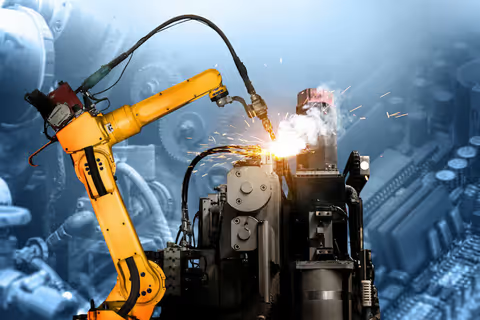
Robotics is another facet of smart farming technology. Robots designed for agricultural use can perform a range of tasks, from planting and weeding to harvesting and packaging. These autonomous machines can operate around the clock, increasing the efficiency of farm labor and alleviating the strain on human workers. With advancements in artificial intelligence (AI), these robots are becoming more adept at precision tasks, leading to improved productivity and reduced operational costs.
Furthermore, smart farming incorporates sophisticated software platforms that integrate and process data from various sources. These platforms use AI and machine learning algorithms to provide predictive analytics, assisting farmers in anticipating trends in crop demand, managing inventory, and planning production cycles. By having access to predictive insights, farmers can better align their operations with market conditions, enhancing profitability.
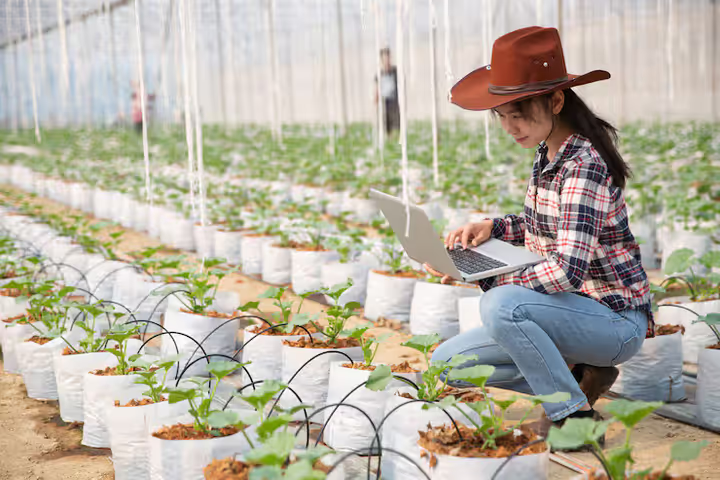
Greenhouse farming also benefits significantly from smart farming tools. Controlled environment agriculture (CEA) technologies regulate the conditions inside greenhouses to maximize crop growth. This control is achieved through automated systems that manage lighting, temperature, humidity, and CO2 levels. The integration of smart controls into greenhouse operations allows for consistent monitoring and adjustments, ensuring optimal conditions for the growth of high-quality produce.
The adoption of smart farming tools also fosters sustainable agricultural practices. By optimizing inputs and minimizing waste, precision agriculture helps conserve valuable resources like water and nutrients. Additionally, smart tools enable better management of livestock through the use of RFID tags and GPS collars, which monitor health and behavior to enhance farm animal welfare and productivity.
Research and development in the field of smart farming continue to progress, resulting in newer tools and more refined technologies. This progression underscores the potential infinite possibilities of innovation in agriculture. The pursuit of increased efficiency, sustainability, and food security drives the exploration and enhancement of smart farming tools.
In conclusion, smart farming tools are reshaping the landscape of modern agriculture. With capabilities to improve decision-making, increase yields, and sustain resources, they represent a revolutionary approach to farming. As technology continues to evolve, it can be anticipated that these tools will become even more integral to farming operations worldwide. Through education and awareness, the agricultural community can better embrace these tools and contribute to a more efficient and sustainable future in agriculture.