Industrial Water Treatment Systems: A Complete Guide for Modern Industries
Water plays an essential role in almost every industrial process. From manufacturing plants and food processing facilities to power generation and chemical production, industries rely on clean and properly treated water to maintain operations. As industrial activities expand globally, managing water quality has become increasingly important for efficiency, environmental protection, and regulatory compliance.
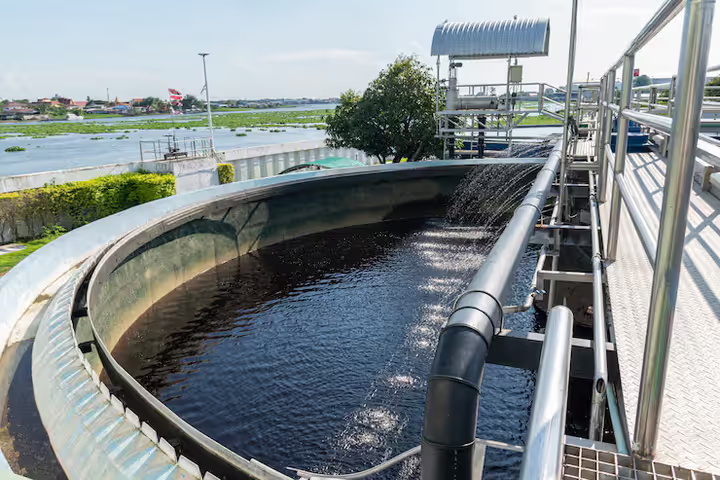
Industrial water treatment systems are designed to process water so it can be safely used, reused, or discharged. These systems help remove impurities, contaminants, and unwanted substances that could affect machinery, production quality, or ecosystems.
Understanding Industrial Water Treatment Systems
Industrial water treatment systems refer to technologies and processes used to improve water quality for industrial applications. Natural water sources often contain minerals, bacteria, suspended particles, chemicals, and dissolved solids. Without treatment, these elements can create operational challenges.
Industries developed treatment systems because untreated water may lead to:
• Scale formation in equipment
• Corrosion in pipelines and machinery
• Reduced process efficiency
• Increased maintenance requirements
• Environmental concerns from wastewater discharge
The treatment process varies according to industry requirements. Some facilities need highly purified water for precision manufacturing, while others focus on wastewater recycling and environmental management.
Common industrial water treatment methods include:
| Treatment Method | Main Purpose | Typical Applications |
|---|---|---|
| Filtration | Removes suspended particles | Manufacturing plants |
| Reverse Osmosis | Removes dissolved solids | Electronics production |
| Softening | Reduces mineral hardness | Boiler systems |
| Ultraviolet Treatment | Controls microorganisms | Food processing |
| Chemical Treatment | Neutralizes contaminants | Industrial wastewater |
| Membrane Separation | Purifies process water | Pharmaceutical sectors |
Industries increasingly use advanced filtration technologies and water purification systems because they support sustainable resource management and operational reliability.
Why Industrial Water Treatment Matters Today
Water availability and environmental challenges have become major concerns worldwide. Rapid industrial growth and population expansion increase pressure on water resources.
Industrial water treatment affects a wide range of sectors:
• Manufacturing industries
• Energy facilities
• Chemical processing plants
• Food and beverage production
• Textile industries
• Pharmaceutical operations
• Mining and heavy industries
Modern industries face several water-related issues:
• Water scarcity in many regions
• Rising environmental standards
• Equipment performance concerns
• Growing sustainability expectations
• Wastewater management challenges
Industrial wastewater treatment and water recycling technologies help address these concerns. Efficient systems support responsible resource use while reducing environmental impact.
The following chart shows common goals industries prioritize in water management:
| Water Management Priority | Relative Industry Focus |
|---|---|
| Water Conservation | High |
| Regulatory Compliance | High |
| Process Efficiency | Medium-High |
| Environmental Protection | High |
| Equipment Reliability | Medium |
| Resource Recovery | Growing |
Recent discussions around industrial sustainability frequently include high-value topics such as water treatment technologies, wastewater management systems, environmental compliance strategies, sustainable manufacturing practices, and industrial process optimization.
These topics continue gaining attention because water management has become part of long-term operational planning.
Recent Developments and Industry Trends
Industrial water treatment technologies have evolved significantly over the past year. Organizations increasingly focus on digital monitoring, sustainability, and resource efficiency.
Several important developments observed during 2025–2026 include:
• Greater adoption of smart monitoring systems
• Increased use of AI-supported predictive maintenance
• Expansion of industrial water reuse programs
• Growth in membrane filtration technologies
• More emphasis on zero liquid discharge approaches
Artificial intelligence tools are now being integrated into water treatment management systems. Sensors collect operational data and monitor water quality conditions in real time.
Predictive systems may identify:
• Equipment performance changes
• Filter replacement needs
• Water chemistry variations
• Operational inefficiencies
Industries are also paying more attention to circular water management strategies.
A growing trend involves wastewater reuse systems:
Water Source
      ↓
Primary Treatment
      ↓
Secondary Treatment
      ↓
Advanced Filtration
      ↓
Water Reuse Process
      ↓
Industrial Application
Water reuse reduces dependence on fresh water sources and supports environmental sustainability initiatives.
Reports published during 2025 also highlighted increasing investment in advanced membrane technologies because they improve purification efficiency while reducing waste generation.
Regulations and Environmental Policies
Industrial water treatment systems operate within legal and environmental frameworks established by governments and regulatory agencies.
Different countries have their own rules for wastewater discharge and water quality management.
Examples include:
• Water pollution control regulations
• Industrial discharge standards
• Environmental impact guidelines
• Wastewater monitoring requirements
• Water conservation programs
In the United States, environmental regulations are commonly associated with the United States Environmental Protection Agency.
In India, industrial wastewater management is influenced by agencies such as the Central Pollution Control Board.
Within the European Union, industries often follow directives related to water quality and pollution control.
Common regulatory objectives include:
• Reducing industrial pollution
• Protecting groundwater sources
• Encouraging wastewater treatment
• Promoting sustainable resource use
• Monitoring discharge standards
Failure to follow environmental guidelines can create operational and environmental challenges.
As climate concerns increase globally, governments continue introducing updated sustainability initiatives related to industrial water management.
Helpful Tools and Resources
Modern industrial operations often use digital resources to manage water systems more effectively.
Useful tools and resources include:
• Water quality monitoring dashboards
• pH and conductivity calculators
• Flow rate calculators
• Water footprint assessment tools
• Treatment design templates
• Industrial compliance reporting platforms
• Environmental monitoring software
• Membrane performance analysis tools
Widely used online resources include:
• Water quality databases
• Environmental agency portals
• Industrial sustainability reports
• Regulatory guidance documents
• Water management research publications
Organizations also use data analytics platforms to monitor:
• Water consumption patterns
• Chemical treatment efficiency
• Equipment performance indicators
• Wastewater discharge metrics
Digital technologies help industries make informed decisions using measurable operational insights.
Common Questions About Industrial Water Treatment Systems
What is the purpose of industrial water treatment systems?
Industrial water treatment systems improve water quality for industrial use by removing contaminants, minerals, microorganisms, and impurities that may interfere with operations.
Which industries use industrial water treatment technologies?
Manufacturing, power generation, pharmaceuticals, textiles, food processing, mining, and chemical industries commonly use water treatment systems.
What is industrial wastewater treatment?
Industrial wastewater treatment involves processing used water generated during industrial activities so contaminants are removed before reuse or discharge.
Why is water recycling becoming more important?
Water recycling supports conservation efforts, reduces environmental pressure, and helps industries manage limited water resources more efficiently.
What technologies are commonly used in industrial treatment systems?
Filtration, reverse osmosis, ultraviolet purification, membrane separation, softening systems, and chemical treatment methods are widely used.
Conclusion
Industrial water treatment systems have become an essential part of modern industrial operations. These systems support process efficiency, environmental protection, and sustainable water use across many sectors.
As industries continue facing water scarcity challenges and stricter environmental requirements, treatment technologies are evolving rapidly. Trends such as smart monitoring, industrial water recycling, and advanced filtration systems indicate a shift toward more efficient resource management.
Understanding industrial water treatment helps organizations and the general public recognize how responsible water practices contribute to long-term environmental and operational sustainability.