Smart Home Devices: An Informative Guide to Building a Connected Home
Smart home devices are electronic products connected through the internet or local networks that allow users to monitor, automate, and control various household functions. These devices can include lighting systems, thermostats, security cameras, smart speakers, sensors, smart locks, and energy management solutions.
The concept of a connected home emerged from advances in the Internet of Things (IoT), a technology framework that enables devices to communicate with one another. Instead of operating independently, smart devices share information and respond to user preferences or automated routines.
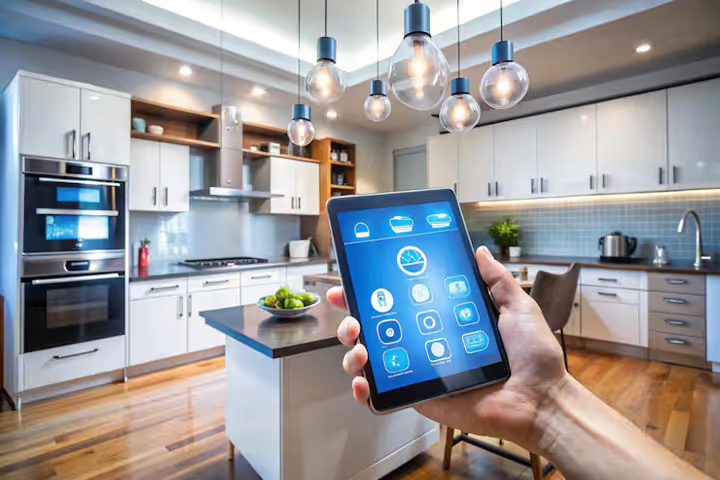
A connected home aims to improve convenience, efficiency, security, and accessibility. For example, a homeowner may schedule lights to turn on at sunset, receive notifications from security sensors, or monitor energy consumption through a mobile application.
As internet connectivity and cloud computing technologies have become more widespread, smart home ecosystems have evolved from niche innovations into commonly used household technologies across many countries.
Common Types of Smart Home Devices
| Device Category | Primary Function |
|---|---|
| Smart Speakers | Voice control and automation |
| Smart Lighting | Remote and scheduled lighting control |
| Smart Thermostats | Temperature management |
| Smart Security Cameras | Home monitoring |
| Smart Locks | Digital access control |
| Smart Sensors | Motion, smoke, water leak detection |
| Smart Plugs | Control of traditional appliances |
| Smart Appliances | Connected refrigerators, washers, and ovens |
Why Smart Home Devices Matter Today
Modern households increasingly rely on digital technology for communication, entertainment, security, and energy management. Smart home devices address several practical challenges faced by homeowners and residents.
One significant benefit is convenience. Automated routines can reduce repetitive tasks by controlling multiple devices simultaneously. Users can manage connected devices through smartphones, tablets, or voice assistants.
Security is another important factor. Smart cameras, door sensors, and monitoring systems can provide alerts when unusual activity is detected. While these systems do not eliminate risks entirely, they can improve awareness and response times.
Energy efficiency has also become a major consideration. Smart thermostats, lighting systems, and energy-monitoring devices help households better understand and manage electricity consumption.
Accessibility benefits many individuals, including older adults and people with mobility limitations. Voice-controlled systems and automated home functions can simplify daily activities and support independent living.
Key Problems Smart Home Technology Helps Address
- Manual control of household systems
- Limited visibility into home security conditions
- Difficulty tracking energy consumption
- Inconsistent temperature management
- Challenges in managing multiple appliances
- Accessibility barriers for some residents
Smart Home Benefits at a Glance
| Area | Potential Benefit |
|---|---|
| Security | Real-time alerts and monitoring |
| Energy Management | Improved awareness of electricity usage |
| Comfort | Automated environmental control |
| Accessibility | Easier device interaction |
| Convenience | Remote operation and scheduling |
| Home Management | Centralized control of connected devices |
Recent Trends and Developments in Smart Home Technology
The smart home industry has experienced notable developments throughout 2025 and 2026. Several trends continue to influence how connected devices are designed and adopted.
Wider Adoption of Matter Standard
The Matter interoperability standard continued expanding during 2025. Matter was developed to improve compatibility between devices from different manufacturers. As more products adopt this standard, users may find it easier to connect devices within a unified ecosystem.
Growth of Artificial Intelligence Integration
Artificial intelligence capabilities have become more common in smart home platforms. AI-powered systems can analyze household patterns and automate actions based on user behavior. Examples include predictive climate control and intelligent energy optimization.
Increased Focus on Cybersecurity
Throughout 2025, cybersecurity remained a major topic in connected home technology. Manufacturers introduced stronger authentication methods, automatic security updates, and enhanced privacy controls to address growing concerns about connected-device vulnerabilities.
Energy Monitoring Innovations
Rising global interest in sustainability has encouraged the development of advanced energy-monitoring solutions. New smart meters and connected energy platforms provide more detailed consumption data and help households identify areas for efficiency improvements.
Expansion of Edge Computing
Edge computing allows certain smart home functions to process data locally instead of relying entirely on cloud servers. This can improve response times, reduce internet dependency, and strengthen privacy protections.
Smart Home Technology Trend Overview
Trend Popularity Growth

AI Automation        ██████████
Energy Monitoring    █████████
Cybersecurity        █████████
Matter Compatibility ████████
Edge Computing       ███████
Privacy and Data Regulations Affecting Smart Homes
Smart home devices often collect information about household activities, device usage, and environmental conditions. Because of this, privacy regulations play an important role in shaping how connected products operate.
Many countries have introduced data protection frameworks that influence device manufacturers and service providers.
Examples of Relevant Regulations
| Region | Regulation |
|---|---|
| European Union | General Data Protection Regulation (GDPR) |
| United Kingdom | UK GDPR and Data Protection Act |
| United States | State-level privacy laws |
| India | Digital Personal Data Protection Act (DPDP Act) |
| Australia | Privacy Act and related amendments |
These regulations generally focus on:
- Transparency regarding data collection
- User consent requirements
- Data security responsibilities
- Rights to access or delete personal information
- Breach notification procedures
Device Security Expectations
Manufacturers are increasingly expected to implement:
- Secure passwords and authentication
- Software update mechanisms
- Encryption technologies
- Vulnerability management programs
- Privacy-by-design principles
Consumers should review device privacy settings and understand how data is collected, stored, and shared.
Government Initiatives Supporting Connected Technologies
Many governments have introduced smart city, energy efficiency, and digital infrastructure programs that indirectly support smart home innovation.
Examples include:
- Smart energy grid modernization
- Digital infrastructure investments
- Connected building initiatives
- Sustainability and energy efficiency programs
- Internet connectivity expansion projects
These initiatives can encourage broader adoption of connected technologies while supporting innovation in residential environments.
Useful Tools and Resources for Smart Home Management
A variety of tools and resources help users manage, secure, and optimize connected homes.
Smart Home Platforms
- Google Home
- Apple Home
- Amazon Alexa
- Samsung SmartThings
- Home Assistant
These platforms allow centralized management of compatible devices through a single interface.
Network Monitoring Tools
- Fing Network Scanner
- Wireshark
- Advanced IP Scanner
These tools can help users understand which devices are connected to their networks.
Energy Tracking Resources
- Smart meter dashboards
- Utility energy portals
- Energy consumption monitoring applications
Such resources provide visibility into electricity usage patterns and household efficiency.
Home Automation Resources
- Automation templates
- Device compatibility databases
- Smart home community forums
- IoT documentation libraries
These resources can help users design automation routines and troubleshoot technical issues.
Security and Privacy Resources
- Password managers
- Multi-factor authentication applications
- Firmware update checkers
- Cybersecurity awareness guides
Maintaining device security remains an important aspect of connected home management.
Frequently Asked Questions
What is a smart home device?
A smart home device is an internet-connected product that can communicate with other devices or be controlled remotely. Examples include smart lights, cameras, thermostats, and speakers.
Do smart home devices require internet access?
Many devices use internet connectivity for remote access and cloud-based features. However, some systems can perform certain functions locally through home networks.
Are smart home devices secure?
Security depends on device design, software updates, password practices, and network protection measures. Keeping firmware updated and enabling security features can help reduce risks.
Can devices from different brands work together?
In many cases, yes. Compatibility depends on supported standards and platforms. Adoption of the Matter standard has improved interoperability among various manufacturers.
Do smart home devices help reduce energy consumption?
Some devices may support more efficient energy management by providing monitoring tools, automation features, and usage insights. Actual results depend on household habits and device configurations.
What should users consider before creating a connected home?
Important considerations include:
- Device compatibility
- Privacy settings
- Security features
- Network reliability
- Long-term software support
- Ease of management
Conclusion
Smart home devices represent an important development in modern residential technology. By connecting household systems through digital networks, these devices can improve convenience, accessibility, energy awareness, and home management capabilities.
Recent developments such as artificial intelligence integration, enhanced cybersecurity practices, Matter compatibility, and energy monitoring innovations continue to shape the connected home landscape. At the same time, privacy regulations and security expectations are becoming increasingly important as more devices collect and process personal data.
For households exploring connected technology, understanding device compatibility, privacy considerations, and available management tools can help create a more efficient and informed smart home experience. As technology continues to evolve, connected homes are likely to remain a significant part of the broader digital transformation occurring across everyday life.