The Ultimate Guide to Forklifts and Their Industrial Applications
Forklifts are specialized industrial vehicles designed to lift, move, stack, and transport heavy materials over short distances. They are among the most widely used pieces of material handling equipment in warehouses, manufacturing facilities, distribution centers, ports, and construction sites.
Before forklifts became common, businesses relied heavily on manual labor, carts, cranes, and other mechanical systems to move goods. As industries expanded during the twentieth century, the need for faster and safer material movement led to the development of forklifts. Today, they play a central role in supply chain management and warehouse operations around the world.
A forklift typically consists of a powered vehicle, lifting mechanism, forks, counterweight, and operator controls. Different forklift models are designed for specific environments, including indoor warehouses, outdoor construction areas, and narrow storage aisles.
The growth of e-commerce, manufacturing, and global logistics has increased demand for efficient material handling solutions. Forklifts help organizations improve productivity while reducing physical strain on workers.
Common Types of Forklifts
| Forklift Type | Typical Application |
|---|---|
| Counterbalance Forklift | General warehouse operations |
| Reach Truck | High-rack storage facilities |
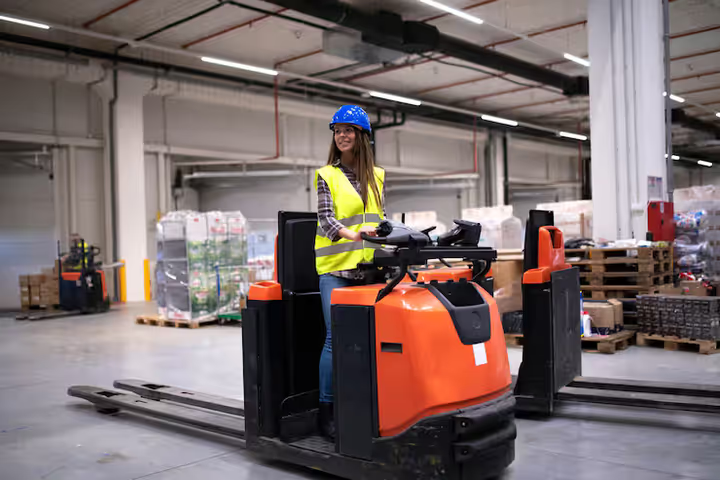
| Pallet Jack | Moving palletized goods |
| Rough Terrain Forklift | Construction and outdoor sites |
| Order Picker | Distribution centers |
| Electric Forklift | Indoor operations with low emissions |
Why Forklifts Matter in Modern Industry
Forklifts are essential because they help businesses move large volumes of goods efficiently and safely. Modern supply chains depend on rapid transportation and storage processes, making forklifts a critical component of logistics infrastructure.
Several industries rely heavily on forklifts:
- Warehousing and distribution
- Manufacturing facilities
- Retail logistics centers
- Construction projects
- Agricultural operations
- Shipping ports and terminals
- Mining and industrial facilities
Without forklifts, many organizations would experience slower operations, increased labor demands, and higher risks of workplace injuries.
Key Problems Forklifts Help Solve
Improving Productivity
Forklifts enable workers to move heavy loads quickly, reducing the time required for loading, unloading, and storage activities.
Enhancing Workplace Safety
Properly operated forklifts minimize manual lifting and reduce the risk of musculoskeletal injuries associated with handling heavy materials.
Optimizing Warehouse Space
Modern forklifts can lift materials to significant heights, allowing warehouses to maximize vertical storage capacity.
Supporting Supply Chain Efficiency
Fast and accurate material movement helps maintain inventory flow and supports just-in-time logistics systems.
Industries Most Affected by Forklift Technology
The continued evolution of forklift technology affects numerous sectors:
| Industry | Impact |
|---|---|
| E-commerce | Faster order fulfillment |
| Manufacturing | Efficient production material movement |
| Logistics | Improved cargo handling |
| Retail | Better inventory management |
| Construction | Transportation of building materials |
| Agriculture | Handling crops and supplies |
Recent Updates and Industry Trends
The forklift industry has experienced significant technological developments during the past year. Many organizations are focusing on automation, sustainability, and digital warehouse management.
Growth of Electric Forklifts
During 2025 and early 2026, electric forklifts continued gaining popularity due to advances in battery technology. Lithium-ion battery systems are increasingly replacing traditional lead-acid batteries because they support faster charging and lower maintenance requirements.
Automation and Autonomous Vehicles
Automated Guided Vehicles (AGVs) and Autonomous Mobile Robots (AMRs) are becoming more common in large warehouses. These systems use sensors, artificial intelligence, and navigation software to move materials with minimal human intervention.
Smart Fleet Management
Many organizations now use telematics systems that collect data on forklift performance, operator behavior, maintenance schedules, and equipment utilization.
Benefits include:
- Improved equipment monitoring
- Predictive maintenance planning
- Reduced downtime
- Enhanced operational efficiency
Warehouse Digitalization
The integration of forklifts with warehouse management systems (WMS) has become increasingly common in 2025–2026. Connected equipment allows businesses to track inventory movement in real time.
Industry Trend Overview
| Trend | Adoption Level |
|---|---|
| Electric Forklifts | High |
| Lithium-Ion Batteries | High |
| Fleet Telematics | Moderate to High |
| Warehouse Automation | Growing |
| AI-Based Optimization | Emerging |
Technology Adoption Illustration
Electric Forklifts      ██████████ 85%
Telematics Systems      ████████   70%
Warehouse Automation    ██████     55%
AI Optimization         ████       35%
Illustrative representation of industry adoption trends.
Laws, Regulations, and Safety Policies
Forklift operations are subject to workplace safety regulations in many countries. These rules aim to reduce accidents, injuries, and equipment damage.
Workplace Safety Requirements
Organizations are generally expected to:
- Maintain equipment regularly
- Conduct safety inspections
- Provide operator training
- Establish traffic management procedures
- Ensure safe load handling practices
Occupational Safety Standards
Many countries enforce regulations through occupational safety authorities. Examples include:
- Occupational Safety and Health Administration (OSHA) standards in the United States
- Health and Safety Executive (HSE) guidance in the United Kingdom
- Workplace safety regulations administered by national labor authorities in many countries
Forklift Safety Principles
Operators are typically required to:
- Inspect equipment before use
- Follow load capacity limits
- Wear required safety equipment
- Maintain clear visibility while operating
- Observe workplace speed restrictions
Environmental Policies
Governments worldwide are encouraging lower-emission industrial equipment. This has contributed to increased adoption of electric forklifts and energy-efficient warehouse technologies.
Warehouse Compliance Checklist
| Compliance Area | Purpose |
|---|---|
| Equipment Inspection | Identify mechanical issues |
| Operator Certification | Improve safe operation |
| Maintenance Records | Support compliance audits |
| Safety Signage | Reduce workplace risks |
| Load Capacity Labels | Prevent overloading |
Helpful Tools and Resources
Several digital tools and resources help organizations manage forklift operations effectively.
Warehouse Management Systems
Warehouse management platforms help track inventory, optimize storage locations, and coordinate material movement.
Common features include:
- Inventory tracking
- Order management
- Barcode integration
- Reporting dashboards
Fleet Management Software
These platforms monitor forklift performance and maintenance schedules.
Key functions:
- Utilization analysis
- Maintenance alerts
- Fuel and battery monitoring
- Operator activity tracking
Forklift Load Calculators
Load capacity calculators help determine safe lifting limits based on load dimensions, weight distribution, and lift height.
Training Platforms
Many organizations use online learning systems to provide educational resources on forklift operation, safety awareness, and workplace compliance.
Useful Resources
| Resource Type | Purpose |
|---|---|
| Warehouse Management Software | Inventory control |
| Fleet Tracking Systems | Equipment monitoring |
| Digital Inspection Forms | Safety checks |
| Load Calculators | Capacity planning |
| Maintenance Schedulers | Preventive maintenance |
| Training Portals | Safety education |
Frequently Asked Questions
What is the primary purpose of a forklift?
A forklift is designed to lift, transport, and stack heavy materials efficiently within warehouses, factories, construction sites, and other industrial environments.
Are electric forklifts replacing traditional forklifts?
Electric forklifts are becoming increasingly common, especially in indoor facilities. However, internal combustion forklifts remain useful in certain outdoor and heavy-duty applications.
How high can forklifts lift materials?
The lifting height depends on the forklift type and configuration. Some warehouse forklifts can reach storage racks exceeding several meters in height.
Why is forklift safety important?
Forklifts handle heavy loads and operate in busy environments. Following safety procedures helps reduce workplace accidents, equipment damage, and operational disruptions.
What industries use forklifts most frequently?
Warehousing, logistics, manufacturing, retail distribution, construction, agriculture, and shipping industries are among the largest users of forklifts.
Can forklifts be integrated with modern technology systems?
Yes. Many modern forklifts connect with warehouse management systems, telematics platforms, and fleet monitoring software to improve efficiency and data visibility.
Conclusion
Forklifts remain one of the most important pieces of industrial equipment in modern supply chains. Their ability to move, lift, and organize heavy materials makes them essential across warehouses, manufacturing facilities, construction projects, and logistics operations.
Recent developments in electric power systems, warehouse automation, fleet management technology, and digital integration are reshaping how forklifts are used. At the same time, workplace safety regulations and environmental initiatives continue influencing equipment design and operational practices.
As industries become increasingly data-driven and automated, forklifts will remain a vital part of efficient material handling and supply chain management. Understanding their applications, safety requirements, technological advancements, and available resources can help organizations and individuals better appreciate their role in modern industrial operations.