The Ultimate Guide to Industrial Fasteners and Their Industrial Applications
Industrial fasteners are mechanical components used to join, secure, or assemble two or more objects together. They play a critical role in modern engineering, manufacturing, construction, transportation, energy production, and infrastructure development. Although often small in size, fasteners contribute significantly to the safety, stability, and durability of structures and machinery.
Fasteners exist because industries require reliable methods for connecting components. Unlike permanent joining methods such as welding, many fasteners allow parts to be assembled, disassembled, repaired, or replaced when necessary. This flexibility makes them indispensable across numerous industrial sectors.
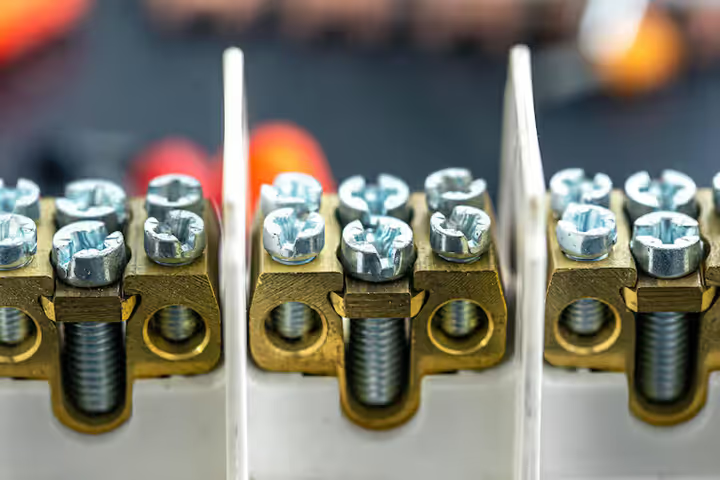
Common examples include bolts, nuts, screws, washers, rivets, studs, anchors, and pins. These components are manufactured from materials such as carbon steel, stainless steel, titanium, aluminum, and specialized alloys depending on environmental and performance requirements.
Common Types of Industrial Fasteners
| Fastener Type | Primary Function | Common Applications |
|---|---|---|
| Bolts | Secure parts with nuts | Structural steel, machinery |
| Screws | Threaded fastening without nuts | Equipment assembly |
| Nuts | Mate with bolts | Mechanical systems |
| Washers | Distribute load and reduce wear | Construction and automotive |
| Rivets | Permanent fastening | Aerospace and bridges |
| Studs | Threaded rods for assembly | Engines and pressure vessels |
| Anchors | Secure objects to concrete | Infrastructure projects |
| Pins | Alignment and positioning | Industrial equipment |
Why Industrial Fasteners Matter Today
Industrial fasteners are fundamental to modern industrial operations. Without them, the assembly of buildings, vehicles, machinery, pipelines, and renewable energy systems would be significantly more challenging.
Several industries depend heavily on fastener technology:
- Construction and infrastructure
- Automotive manufacturing
- Aerospace engineering
- Oil and gas operations
- Renewable energy installations
- Heavy equipment manufacturing
- Railway systems
- Marine applications
The importance of industrial fasteners extends beyond simple assembly. They help solve critical engineering challenges such as:
- Structural stability
- Vibration resistance
- Corrosion prevention
- Load distribution
- Maintenance accessibility
- Equipment reliability
For example, a wind turbine contains thousands of fasteners that must withstand constant vibration, temperature fluctuations, and environmental exposure. Similarly, modern vehicles rely on precision-engineered fasteners to maintain safety and performance standards.
Key Benefits Across Industries
| Industry | Benefit of Fasteners |
|---|---|
| Construction | Structural integrity |
| Automotive | Vehicle safety and durability |
| Aerospace | Weight optimization and reliability |
| Manufacturing | Efficient assembly processes |
| Energy | Secure equipment operation |
| Transportation | Reduced maintenance risks |
Emerging Trends and Recent Developments
The industrial fastener sector continues to evolve as industries seek improved performance, sustainability, and digital integration.
Smart Fastener Technologies
During 2024 and 2025, manufacturers increasingly explored smart fasteners equipped with sensors capable of monitoring tension, vibration, and structural conditions. These technologies support predictive maintenance programs in industrial facilities and infrastructure projects.
Growth in Renewable Energy Applications
The expansion of solar and wind energy projects throughout 2024 and 2025 increased demand for corrosion-resistant and high-strength fasteners. Renewable energy installations often operate in harsh environments requiring specialized materials and coatings.
Advanced Material Innovation
Recent developments have focused on:
- Lightweight titanium alloys
- High-strength stainless steels
- Composite fastener materials
- Enhanced corrosion-resistant coatings
These innovations help improve equipment longevity while reducing overall system weight.
Automation in Manufacturing
Industrial automation continues to influence fastener production. Automated inspection systems, robotic assembly lines, and machine-vision quality control technologies have become more common during the past year.
Sustainability Initiatives
Environmental considerations are encouraging manufacturers to adopt:
- Recyclable materials
- Reduced waste production
- Energy-efficient manufacturing processes
- Longer-lasting protective coatings
Industrial Fastener Market Drivers
The following chart illustrates major factors influencing industrial fastener demand.
| Demand Driver | Impact Level |
|---|---|
| Infrastructure Development | High |
| Manufacturing Expansion | High |
| Renewable Energy Projects | High |
| Transportation Growth | Medium |
| Industrial Automation | Medium |
| Sustainability Requirements | Medium |
Standards, Regulations, and Compliance Requirements
Industrial fasteners are subject to strict regulations and technical standards to ensure safety and reliability.
International Standards
Several globally recognized standards govern fastener manufacturing and application:
- ISO (International Organization for Standardization)
- ASTM standards
- DIN standards
- ANSI standards
- SAE standards
These standards define:
- Material specifications
- Mechanical properties
- Dimensional requirements
- Testing procedures
- Quality control measures
Construction and Infrastructure Regulations
Many countries require certified fasteners for:
- Bridges
- Commercial buildings
- Transportation infrastructure
- Public facilities
Engineers must ensure that selected fasteners comply with applicable building codes and structural requirements.
Environmental Compliance
Manufacturers increasingly follow environmental regulations regarding:
- Chemical coatings
- Material sourcing
- Waste management
- Hazardous substance restrictions
Examples include regulations limiting the use of certain heavy metals and environmentally harmful surface treatments.
Workplace Safety Requirements
Industrial facilities often operate under occupational safety regulations that require proper fastening systems to minimize equipment failures and workplace hazards.
Fastener Selection Factors
Selecting the appropriate fastener depends on multiple engineering considerations.
| Factor | Importance |
|---|---|
| Load Capacity | Determines strength requirements |
| Material Compatibility | Prevents corrosion issues |
| Environmental Conditions | Supports durability |
| Temperature Exposure | Ensures performance stability |
| Vibration Levels | Reduces loosening risks |
| Maintenance Requirements | Improves accessibility |
Helpful Tools and Resources
Professionals working with industrial fasteners often use specialized tools and digital resources to improve accuracy and efficiency.
Torque Calculators
Torque calculators help determine the appropriate tightening force for bolts and screws. Proper torque prevents both under-tightening and over-tightening.
CAD Software
Engineering teams commonly use computer-aided design software to model assemblies and validate fastening requirements before production.
Useful applications include:
- AutoCAD
- SolidWorks
- CATIA
- Fusion 360
Fastener Specification Databases
Digital databases provide technical information such as:
- Material grades
- Mechanical properties
- Thread dimensions
- Performance ratings
Engineering Standards Libraries
Technical standards libraries help engineers verify compliance requirements and design specifications.
Inspection and Measurement Equipment
Common tools include:
- Torque wrenches
- Thread gauges
- Calipers
- Micrometers
- Ultrasonic testing devices
Asset Management Platforms
Large industrial facilities increasingly use digital asset management systems to track maintenance schedules and fastening inspections.
Best Practices for Industrial Fastener Usage
Proper installation and maintenance significantly influence fastener performance.
Recommended practices include:
- Following manufacturer specifications
- Applying correct torque values
- Conducting periodic inspections
- Using compatible materials
- Replacing damaged components promptly
- Monitoring corrosion and wear
- Maintaining accurate maintenance records
Organizations that implement these practices often achieve improved equipment reliability and reduced operational disruptions.
Frequently Asked Questions
What are industrial fasteners used for?
Industrial fasteners are used to join, secure, or assemble components in machinery, buildings, vehicles, infrastructure, and manufacturing equipment. They provide reliable mechanical connections that support structural integrity and operational performance.
What is the difference between a bolt and a screw?
A bolt typically works with a nut to secure components together, while a screw generally threads directly into a material or pre-threaded hole without requiring a separate nut.
Why is corrosion resistance important in fasteners?
Corrosion can weaken fasteners over time, reducing their strength and reliability. Corrosion-resistant materials and coatings help extend service life, especially in outdoor, marine, and industrial environments.
How are fastener standards determined?
Standards are developed by organizations such as ISO, ASTM, DIN, ANSI, and SAE. These organizations establish specifications for dimensions, materials, testing methods, and performance requirements.
What industries use high-strength fasteners?
High-strength fasteners are widely used in construction, aerospace, automotive manufacturing, energy production, transportation systems, and heavy industrial machinery where significant loads and stresses occur.
How often should industrial fasteners be inspected?
Inspection frequency depends on operating conditions, safety requirements, and industry standards. Critical applications often require scheduled inspections as part of preventive maintenance programs.
Conclusion
Industrial fasteners are essential components that support the safe and efficient operation of modern industries. From skyscrapers and transportation systems to manufacturing plants and renewable energy projects, these mechanical connectors provide the strength and reliability required for complex engineering applications.
As technology advances, the fastener industry continues to evolve through smart monitoring systems, advanced materials, automation, and sustainability initiatives. Understanding fastener types, applications, standards, and best practices helps engineers, manufacturers, and facility operators make informed decisions that contribute to safety, durability, and operational efficiency.
Whether used in infrastructure development, industrial automation, or energy systems, industrial fasteners remain a foundational element of modern engineering and industrial progress.