The Ultimate Guide to Security Cameras for Homes and Businesses
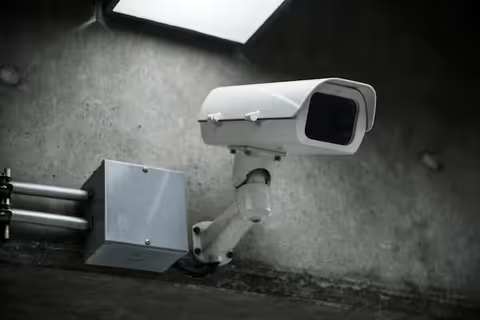
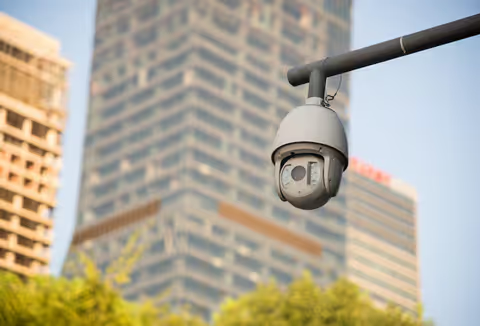
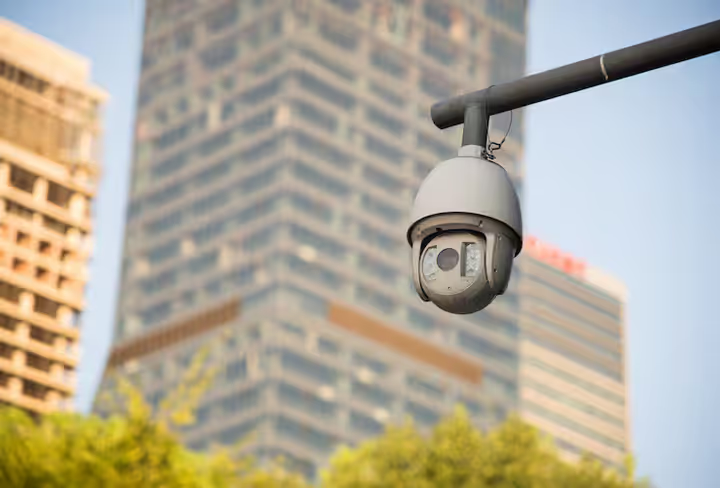
Security cameras, often referred to as surveillance systems or CCTV (Closed-Circuit Television), are devices designed to monitor, record, and sometimes analyze activity within a specific area. These systems are commonly used in residential, commercial, and public environments to enhance safety and awareness.
The concept of surveillance dates back decades, but modern security cameras have evolved significantly with the integration of digital technology, cloud storage, and artificial intelligence. Today’s systems can provide real-time monitoring, motion detection alerts, and even facial recognition capabilities.
Security cameras exist primarily to deter unwanted activities, document events, and provide visibility into areas that may not always be physically monitored. Whether installed at home entrances, offices, warehouses, or public spaces, they play a key role in improving situational awareness.
Why Security Cameras Matter in Today’s Environment
The growing need for safety and monitoring has made security cameras increasingly relevant. Both individuals and organizations rely on them to address various challenges.
Some of the key reasons why security cameras are important include:
- Crime Prevention: Visible cameras can discourage theft, vandalism, and unauthorized access
- Monitoring Activity: Helps track movement in sensitive or high-traffic areas
- Evidence Collection: Recorded footage can assist in investigations or dispute resolution
- Remote Access: Modern systems allow users to view live feeds from smartphones or computers
- Operational Awareness: Businesses can monitor workflows and improve efficiency
Different groups benefit from surveillance systems:
| User Type | Primary Use Case |
|---|---|
| Homeowners | Entry monitoring, package security |
| Retail Stores | Theft prevention, customer behavior |
| Offices | Access control, employee safety |
| Warehouses | Inventory monitoring, perimeter security |
In a rapidly digitizing world, surveillance systems are no longer limited to security alone. They are also part of broader smart infrastructure and data-driven decision-making.
Recent Developments and Trends in Security Cameras
Over the past year, security camera technology has seen notable advancements driven by artificial intelligence, connectivity, and data storage improvements.
Some key trends observed in 2025–2026 include:
- AI-Based Detection (2025): Cameras now distinguish between people, vehicles, and animals, reducing false alerts
- Cloud Integration Growth: More systems use cloud-based storage instead of local DVRs for easier access and backup
- Edge Computing: Processing data directly on the device improves speed and reduces bandwidth usage
- Privacy-Focused Features: Enhanced encryption and user-controlled data settings are becoming standard
- Smart Home Integration: Cameras increasingly connect with platforms like Google Home and Amazon Alexa
Another significant trend is the adoption of wireless and battery-powered cameras, which simplify installation and expand usability in remote or temporary locations.
A simplified comparison of older vs modern systems:
| Feature | Traditional Cameras | Modern Cameras |
|---|---|---|
| Storage | Local DVR | Cloud & hybrid |
| Connectivity | Wired | Wireless & IoT-enabled |
| Alerts | Basic motion | AI-based notifications |
| Accessibility | On-site viewing | Remote via apps |
These updates indicate a shift toward smarter, more adaptive surveillance systems.
Laws and Policies Related to Security Cameras
The use of security cameras is subject to legal and regulatory frameworks that vary by country and region. These rules aim to balance safety with privacy rights.
In India, surveillance practices are influenced by general privacy principles and emerging data protection regulations. Some important considerations include:
- Right to Privacy: Recognized under constitutional law, meaning cameras should not invade private spaces
- Personal Data Protection Bill (updates ongoing as of 2025): Focuses on how personal data, including video footage, is collected and stored
- Public vs Private Spaces: Cameras are generally acceptable in public-facing areas but restricted in private zones like bathrooms or changing rooms
- Consent Awareness: Businesses often display notices indicating that surveillance is in use
Organizations may also need to follow internal policies such as:
- Data retention limits
- Secure storage practices
- Controlled access to recorded footage
Failure to follow legal guidelines can lead to compliance issues, so understanding applicable regulations is essential before installing surveillance systems.
Tools and Resources for Security Camera Systems
Several tools and platforms can help users manage and optimize security camera setups effectively. These resources support monitoring, storage, and system integration.
Common tools include:
-
Mobile Monitoring Apps:
- Google Home
- Amazon Alexa
- Manufacturer-specific apps for live viewing and alerts
-
Cloud Storage Platforms:
- Secure video backup and remote access
- Scalable storage for long-term recording
-
Video Management Software (VMS):
- Centralized control for multiple cameras
- Playback, analytics, and reporting features
-
Network Calculators:
- Help estimate bandwidth and storage requirements
-
System Planning Templates:
- Assist in camera placement and coverage mapping
These tools make it easier to design, operate, and maintain surveillance systems without requiring advanced technical expertise.
Frequently Asked Questions
What is the difference between IP cameras and analog cameras?
IP cameras transmit data over a network and offer higher resolution and remote access, while analog cameras use traditional cabling and limited features.
Do security cameras work without internet?
Yes, many systems can record locally without internet, but remote access and cloud features typically require connectivity.
How long is footage usually stored?
Storage duration depends on system capacity and settings. Some systems store footage for a few days, while others can retain data for weeks or months.
Are security cameras allowed in workplaces?
Yes, but they must comply with privacy laws and should not be placed in areas where individuals expect privacy.
What factors affect camera performance?
Key factors include resolution, lighting conditions, field of view, storage capacity, and network stability.
Conclusion
Security cameras have become an integral part of modern safety and monitoring systems for both homes and businesses. Their evolution from basic recording devices to intelligent, connected systems reflects broader technological advancements.
Understanding how these systems work, why they are important, and how they are regulated helps users make informed decisions. With ongoing innovations in artificial intelligence, cloud computing, and smart integration, security cameras continue to adapt to changing needs.
By using appropriate tools, following legal guidelines, and staying updated on recent trends, individuals and organizations can effectively utilize surveillance systems to enhance awareness and security in a responsible manner.