Understanding Vaccine Filling Machines: How They Support Modern Vaccine Production
Vaccines play a vital role in protecting public health by helping prevent infectious diseases. Behind every vaccine vial or syringe is a highly controlled manufacturing process designed to ensure safety, quality, and consistency. One important part of this process is the vaccine filling machine.
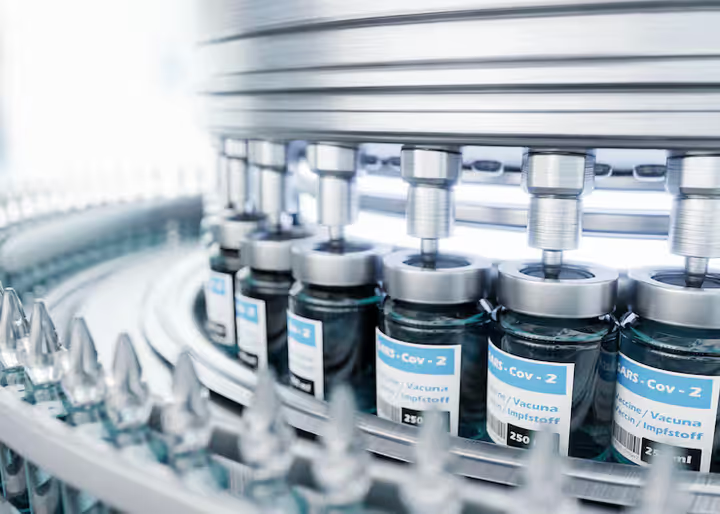
A vaccine filling machine is specialized pharmaceutical manufacturing equipment used to accurately fill vaccine formulations into vials, syringes, cartridges, or other sterile containers. These machines are designed to operate under strict cleanliness and quality standards to reduce contamination risks and maintain product integrity.
As global demand for vaccines continues to grow, vaccine filling technology has become increasingly important. Advances in automation, sterile manufacturing, and quality control have helped manufacturers improve efficiency while meeting regulatory requirements.
What Is a Vaccine Filling Machine and Why Does It Exist?
A vaccine filling machine is a piece of pharmaceutical production equipment that transfers a measured amount of vaccine into a sterile container. The process must be highly accurate because even small variations can affect product consistency and compliance requirements.
The need for vaccine filling machines emerged as vaccine production expanded beyond small laboratory-scale operations. Modern vaccine manufacturing requires the ability to process large quantities while maintaining strict sterility standards.
Common container types include:
- Glass vials
- Prefilled syringes
- Cartridges
- Ampoules
- Single-dose containers
The filling process typically occurs in controlled cleanroom environments where temperature, air quality, and contamination risks are carefully monitored.
Main Components of a Vaccine Filling System
| Component | Purpose |
|---|---|
| Filling Unit | Dispenses precise vaccine volumes |
| Conveyor System | Moves containers through production stages |
| Sterilization Equipment | Supports contamination control |
| Stoppering System | Seals containers after filling |
| Inspection System | Detects defects and inconsistencies |
| Labeling Unit | Applies identification information |
Together, these components help maintain consistency throughout the production process.
Why Vaccine Filling Machines Matter Today
The pharmaceutical industry faces increasing demand for vaccines due to population growth, disease prevention programs, and global immunization initiatives. Vaccine filling machines help manufacturers address these challenges while maintaining quality standards.
Several factors contribute to their importance.
Supporting Product Safety
Vaccines must remain sterile from production through administration. Filling machines help minimize human contact with the product, reducing contamination risks.
Improving Manufacturing Accuracy
Automated systems can dispense highly precise volumes, helping manufacturers meet quality requirements and maintain consistency between batches.
Increasing Production Capacity
Modern facilities often produce millions of vaccine doses annually. Automated filling equipment allows manufacturers to scale production while maintaining process control.
Enhancing Traceability
Many systems integrate with digital monitoring platforms that track production data, helping manufacturers document quality procedures and comply with regulatory expectations.
Industries and Groups Affected
The impact of vaccine filling technology extends beyond pharmaceutical manufacturers.
- Vaccine developers
- Biotechnology companies
- Contract manufacturing organizations
- Healthcare providers
- Government health agencies
- Regulatory authorities
- Research institutions
These stakeholders rely on efficient vaccine production systems to support public health initiatives and immunization programs.
Problems Vaccine Filling Machines Help Solve
Modern vaccine production involves numerous challenges. Vaccine filling equipment helps address several key issues.
| Challenge | How Filling Machines Help |
|---|---|
| Contamination Risk | Automated sterile processing |
| Inconsistent Dosing | Precise volume control |
| Production Delays | Continuous operation capabilities |
| Human Error | Reduced manual intervention |
| Quality Documentation | Digital process monitoring |
| Scalability Requirements | High-speed production options |
The ability to address these challenges makes filling technology an important part of pharmaceutical manufacturing infrastructure.
Recent Updates and Industry Trends
The vaccine manufacturing sector has experienced notable developments during 2025 and early 2026. Several trends continue to shape vaccine filling technology.
Increased Use of Robotics
During 2025, pharmaceutical manufacturers expanded the use of robotic handling systems in aseptic filling environments. Robotics can reduce direct human interaction with sterile products while supporting production consistency.
Growth of Isolator Technology
Isolator-based filling systems continue gaining popularity. These enclosed systems provide additional protection against contamination and support compliance with evolving pharmaceutical manufacturing standards.
Expansion of Single-Use Technologies
Manufacturers increasingly use disposable fluid paths and components. Single-use systems can simplify cleaning requirements and improve production flexibility.
Data-Driven Manufacturing
Digital monitoring and advanced analytics have become more common across vaccine production facilities. These technologies help manufacturers track performance, identify trends, and improve process control.
Continued Investment in Vaccine Infrastructure
Throughout 2025, multiple countries announced investments in vaccine manufacturing capabilities to strengthen domestic production capacity and improve preparedness for future public health challenges.
Technology Evolution in Vaccine Filling
The following table illustrates how vaccine filling technology has evolved over time.
| Era | Key Characteristics |
|---|---|
| Manual Filling | Labor-intensive processes |
| Semi-Automated Systems | Improved consistency |
| Automated Filling Lines | Higher production efficiency |
| Robotic Systems | Enhanced contamination control |
| Smart Manufacturing Systems | Real-time monitoring and analytics |
Simplified Technology Progress Graph
Automation Level

Smart Systems        ██████████
Robotic Filling      █████████
Automated Filling    ███████
Semi-Automated       █████
Manual Systems       ██

Time →
This progression reflects the industry's focus on efficiency, quality, and regulatory compliance.
Regulations and Policies Affecting Vaccine Filling Machines
Vaccine manufacturing operates within one of the most heavily regulated industries worldwide. Filling machines must support compliance with various pharmaceutical regulations.
Good Manufacturing Practice (GMP)
Good Manufacturing Practice standards establish requirements for pharmaceutical production. Vaccine filling equipment must be designed and operated according to GMP principles.
Areas commonly covered include:
- Equipment qualification
- Process validation
- Documentation procedures
- Personnel training
- Environmental monitoring
- Quality assurance systems
World Health Organization Guidelines
The World Health Organization provides guidance related to vaccine production and quality management. Many manufacturers align their operations with these internationally recognized standards.
Regulatory Agencies
Several regulatory authorities oversee vaccine manufacturing activities.
- U.S. Food and Drug Administration
- European Medicines Agency
- Central Drugs Standard Control Organisation
- World Health Organization
These organizations establish requirements related to safety, quality, manufacturing practices, and product approval.
Government Manufacturing Initiatives
Many governments continue supporting pharmaceutical manufacturing investments through infrastructure programs, innovation initiatives, and public health preparedness strategies. Such programs often encourage modernization of vaccine production facilities, including filling and packaging operations.
Helpful Tools and Resources
Professionals involved in vaccine manufacturing often use a range of tools and resources.
Quality Management Software
These platforms help organizations manage documentation, audits, compliance activities, and quality records.
Examples include:
- Electronic Quality Management Systems (eQMS)
- Document Control Platforms
- Compliance Tracking Software
Manufacturing Execution Systems
Manufacturing Execution Systems (MES) provide real-time visibility into production processes and equipment performance.
Benefits include:
- Production monitoring
- Batch tracking
- Process reporting
- Data collection
Environmental Monitoring Systems
Cleanroom environments require continuous monitoring.
Typical measurements include:
- Air particle counts
- Temperature
- Humidity
- Pressure differentials
Validation Templates
Manufacturers commonly use validation documents for:
- Equipment qualification
- Installation verification
- Operational testing
- Performance qualification
Educational Resources
Useful learning resources include:
- World Health Organization publications
- Pharmaceutical manufacturing guidelines
- GMP training materials
- Regulatory agency guidance documents
- Industry association publications
Frequently Asked Questions
What does a vaccine filling machine do?
A vaccine filling machine accurately transfers vaccine formulations into sterile containers such as vials or syringes while maintaining strict contamination control and quality standards.
Why is sterility important during vaccine filling?
Sterility helps prevent contamination that could affect product safety, quality, or effectiveness. Controlled environments and specialized equipment are used to maintain sterile conditions.
Are vaccine filling machines fully automated?
Many modern systems are highly automated, but human oversight remains important for monitoring, maintenance, quality assurance, and regulatory compliance activities.
What types of vaccines can be processed using filling machines?
Depending on equipment design, filling systems can handle various vaccine formulations, including liquid vaccines, biologics, and other sterile pharmaceutical products.
How do regulations influence vaccine filling operations?
Regulations establish requirements for equipment design, validation, documentation, quality control, and manufacturing practices. Compliance helps ensure product safety and consistency.
What is aseptic filling?
Aseptic filling is a manufacturing process in which sterile products are filled into sterile containers under controlled conditions designed to minimize contamination risks.
Conclusion
Vaccine filling machines are a critical component of modern pharmaceutical manufacturing. These systems help ensure vaccines are accurately filled, safely packaged, and produced under strict quality standards. As vaccine demand continues to evolve, manufacturers increasingly rely on automation, digital monitoring, and advanced sterile processing technologies to improve efficiency and maintain compliance.
Recent developments in robotics, smart manufacturing, and contamination control technologies demonstrate how the industry continues to advance. At the same time, regulations, GMP requirements, and public health initiatives ensure that vaccine production remains focused on safety, quality, and reliability.
Understanding how vaccine filling machines operate provides valuable insight into the complex processes that support global immunization efforts and modern healthcare systems.