Balaji Wafers Manufacturing Info: Ingredients, Process, and Packaging
Potato wafers are among the most widely consumed packaged snack foods in India. Modern manufacturing combines food science, automation, quality control, and packaging technology to produce consistent products while maintaining food safety standards.
This guide explains how Balaji-style potato wafers are manufactured, from selecting raw potatoes to packaging the finished product. It also explores industry trends, food regulations, useful resources, and frequently asked questions. The information is educational and intended to help readers understand large-scale snack food manufacturing rather than any specific proprietary production method.
Understanding Potato Wafer Manufacturing
Potato wafer manufacturing is a food processing operation that transforms fresh potatoes into packaged ready-to-eat snacks through a sequence of cleaning, slicing, frying, seasoning, quality inspection, and packaging.
Large snack manufacturers use automated production lines designed to achieve:
- Consistent product quality
- Uniform slice thickness
- Controlled frying temperatures
- Food safety compliance
- Efficient production
- Longer shelf stability through appropriate packaging
The manufacturing process has evolved significantly over the past few decades. Modern facilities increasingly rely on automated inspection systems, digital monitoring, and quality management practices to reduce variation while maintaining production efficiency.
The snack food manufacturing industry also supports agricultural supply chains by sourcing potatoes and other ingredients from farming communities and food ingredient suppliers.
Why Potato Wafer Manufacturing Matters
Packaged snack manufacturing plays an important role in the broader food processing sector.
Supports Agricultural Production
Potatoes are one of India's major agricultural crops. Food manufacturers create demand for processing-grade potatoes, helping strengthen agricultural supply chains.
Encourages Food Processing Innovation
Modern production facilities use technologies such as:
- Automated slicing equipment
- Oil filtration systems
- Temperature monitoring
- Metal detection
- Automated packaging machines
- Vision inspection systems
These technologies improve consistency and food safety.
Maintains Food Safety Standards
Manufacturers follow quality management systems that help reduce contamination risks while maintaining hygiene during production.
Important quality checks typically include:
| Manufacturing Stage | Purpose |
|---|---|
| Raw potato inspection | Remove damaged potatoes |
| Washing | Remove soil and debris |
| Slicing | Maintain uniform thickness |
| Frying | Develop texture and flavor |
| Seasoning | Ensure even flavor distribution |
| Packaging | Protect freshness |
| Quality inspection | Verify product standards |
Extends Shelf Stability
Packaging technology helps reduce exposure to moisture, oxygen, and contaminants, supporting product quality during transportation and storage.
Supports Manufacturing Automation
Food manufacturing increasingly incorporates:
- Industrial automation
- Quality analytics
- Production monitoring
- Packaging automation
- Inventory management
- Food safety documentation
These developments improve operational efficiency across manufacturing facilities.
Ingredients Used in Potato Wafer Manufacturing
Although recipes vary between manufacturers and product varieties, common ingredients generally include:
| Ingredient | Purpose |
|---|---|
| Potatoes | Primary raw material |
| Edible vegetable oil | Frying medium |
| Salt | Basic seasoning |
| Spice blends | Flavor development |
| Herbs | Additional taste profiles |
| Food-grade seasonings | Product variation |
| Permitted food additives (where applicable) | Maintain product consistency according to regulations |
Manufacturers generally select potato varieties suitable for processing because they provide:
- Appropriate dry matter content
- Lower reducing sugar levels
- Uniform size
- Good frying characteristics
Consistent raw material quality contributes to product appearance, texture, and flavor.
Typical Manufacturing Process
Modern potato wafer production involves several carefully controlled stages.
Raw Material Selection
Fresh potatoes are inspected before entering production. Potatoes showing excessive damage, spoilage, or defects are removed during sorting.
Washing and Cleaning
Potatoes pass through automated washing systems that remove:
- Soil
- Dust
- Stones
- Surface impurities
Clean raw materials improve food hygiene throughout the manufacturing process.
Peeling
Industrial peelers remove potato skins mechanically. Some facilities may also perform manual inspection after peeling to remove remaining imperfections.
Slicing
Automatic slicers cut potatoes into thin, uniform slices.
Uniform thickness is important because it helps:
- Maintain even frying
- Produce consistent texture
- Reduce product variation
Washing After Slicing
Fresh slices are rinsed to remove excess surface starch.
Reducing starch helps improve:
- Crispness
- Frying efficiency
- Product appearance
Frying
Slices enter continuous fryers where temperature is carefully monitored.
During frying:
- Moisture decreases
- Crisp texture develops
- Characteristic color forms
Oil quality is regularly monitored to maintain consistent production standards.
Oil Draining
After frying, excess oil is removed using conveyors or centrifugal equipment.
This stage helps maintain consistent product quality before seasoning.
Seasoning
Flavoring systems distribute seasonings evenly across the wafers.
Examples include:
- Salted
- Tomato-based seasoning
- Masala seasoning
- Cream-based flavors
- Herb-inspired flavors
Automated seasoning equipment helps improve flavor consistency.
Cooling
Products cool before packaging to reduce condensation that could affect freshness.
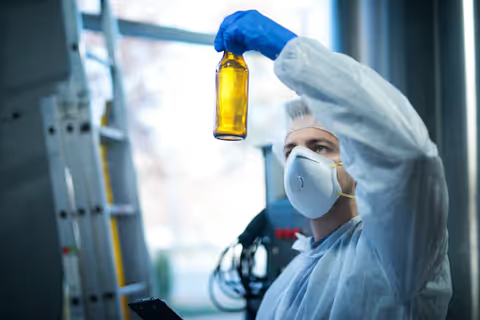
Quality Inspection
Manufacturers inspect products for:
- Color consistency
- Texture
- Weight
- Flavor distribution
- Foreign material
- Packaging integrity
Many production facilities also use metal detection equipment as part of quality control procedures.
Packaging
Packaging machines fill products into sealed packets using food-grade packaging materials.
Packaging helps protect products from:
- Moisture
- Oxygen
- Light
- Physical damage
Nitrogen flushing is commonly used in snack food packaging to reduce oxidation and help preserve product quality during storage.
Example Manufacturing Flow
Raw Potatoes
      │
Cleaning
      │
Peeling
      │
Slicing
      │
Washing
      │
Frying
      │
Oil Draining
      │
Seasoning
      │
Cooling
      │
Quality Inspection
      │
Packaging
      │
Distribution
Packaging Methods Used in Modern Snack Manufacturing
Packaging is an essential part of the production process because it protects food quality throughout transportation and storage.
Common packaging features include:
- Multi-layer laminated films
- Heat sealing
- Nitrogen flushing
- Batch coding
- Manufacturing date printing
- Expiry information
- Barcode printing
- Food labeling
Modern packaging equipment is capable of processing thousands of packets per hour while maintaining sealing consistency.
Packaging materials are selected to provide:
- Moisture resistance
- Oxygen barrier properties
- Mechanical strength
- Printing quality
- Product protection
Recent Updates in the Snack Manufacturing Industry
The packaged snack industry has continued to adopt new technologies during 2025 and early 2026.
Recent developments include:
- Increased investment in automated food processing equipment to improve production efficiency.
- Greater use of digital monitoring systems for temperature, oil quality, and production data.
- Growing adoption of recyclable and environmentally conscious packaging initiatives across parts of the food packaging industry.
- Continued focus on traceability systems that help manufacturers monitor ingredients throughout production.
- Rising emphasis on energy-efficient manufacturing equipment to reduce operational impact.
- Increased attention to food labeling transparency and nutritional information as consumer awareness continues to grow.
These trends reflect broader developments across India's food processing and packaged foods sector.
Food Regulations and Policies in India
Snack food manufacturing operates within India's food safety framework.
Food Safety Standards
Manufacturers are expected to comply with food safety requirements established by the Food Safety and Standards Authority of India (FSSAI).
These regulations generally cover:
- Food hygiene
- Manufacturing practices
- Ingredient standards
- Food labeling
- Packaging requirements
- Food additives
- Quality control
Good Manufacturing Practices (GMP)
Food manufacturers commonly implement Good Manufacturing Practices that support:
- Clean production environments
- Employee hygiene
- Equipment sanitation
- Documentation
- Quality assurance
Food Packaging Requirements
Food packaging typically includes information such as:
- Ingredient list
- Nutritional information
- Net quantity
- Manufacturing date
- Best-before date
- Batch identification
- Storage instructions
- FSSAI license details where applicable
Environmental Considerations
Manufacturing facilities may also follow applicable environmental regulations related to:
- Water management
- Waste disposal
- Air emissions
- Industrial operations
Compliance supports responsible manufacturing practices.
Useful Tools and Resources
The following resources are commonly associated with food manufacturing education and operations.
| Resource | Purpose |
|---|---|
| FSSAI Guidelines | Food safety regulations |
| Food labeling resources | Packaging compliance |
| Nutritional calculators | Nutrition estimation |
| HACCP documentation templates | Food safety planning |
| GMP checklists | Manufacturing hygiene |
| Production planning software | Manufacturing scheduling |
| Quality inspection templates | Process monitoring |
| Inventory management systems | Raw material tracking |
| Packaging specification sheets | Packaging quality documentation |
These resources assist manufacturers, students, researchers, and food industry professionals in understanding production processes and regulatory expectations.
Frequently Asked Questions
What ingredients are commonly used in potato wafer manufacturing?
Most potato wafers are produced using potatoes, edible vegetable oil, salt, seasoning blends, herbs, and other food-grade ingredients that comply with applicable food regulations.
Why are potatoes washed after slicing?
Washing sliced potatoes removes excess surface starch, which helps improve frying consistency, texture, and overall product appearance.
Why is nitrogen used in wafer packaging?
Nitrogen flushing helps reduce oxygen inside the package, which can slow oxidation and support product freshness during storage.
How do manufacturers maintain consistent quality?
Quality is maintained through raw material inspection, automated production equipment, temperature monitoring, laboratory testing, packaging inspections, and food safety management systems.
Which regulations apply to packaged snack manufacturing in India?
Manufacturers generally follow regulations established by the Food Safety and Standards Authority of India (FSSAI), along with applicable packaging, labeling, hygiene, and manufacturing requirements.
Conclusion
Potato wafer manufacturing combines agricultural sourcing, food science, engineering, automation, quality control, and packaging technology to produce consistent packaged snacks. Every production stage—from selecting suitable potatoes to final packaging—contributes to product quality and food safety.
As manufacturing technology continues to advance, greater emphasis is being placed on automation, digital quality monitoring, sustainable packaging, and regulatory compliance. Understanding these processes provides valuable insight into how modern food manufacturing operates and how quality standards are maintained throughout the production lifecycle.