Glass Bottle Manufacturers: A Complete Guide to Production, Materials, and Industry Applications
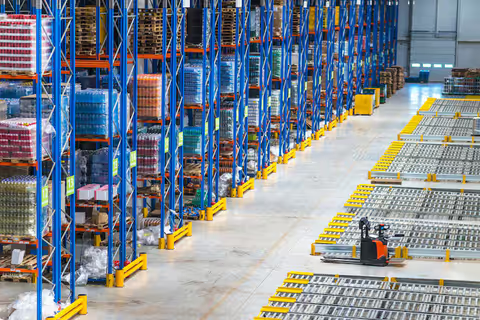
Glass bottle manufacturers play an essential role in modern packaging by producing durable, recyclable, and chemically stable containers for a wide range of industries. Glass bottles are widely used because they help preserve product quality while offering a packaging solution that can be recycled repeatedly without significant loss of quality.
Today, glass manufacturing combines traditional glass-forming techniques with advanced automation, precision engineering, and quality control systems. Modern production facilities focus on efficiency, product consistency, environmental responsibility, and compliance with international manufacturing standards.
Whether used for beverages, pharmaceuticals, cosmetics, laboratory chemicals, or food packaging, glass bottles remain one of the most trusted packaging materials across global industries.
Understanding Glass Bottle Manufacturing
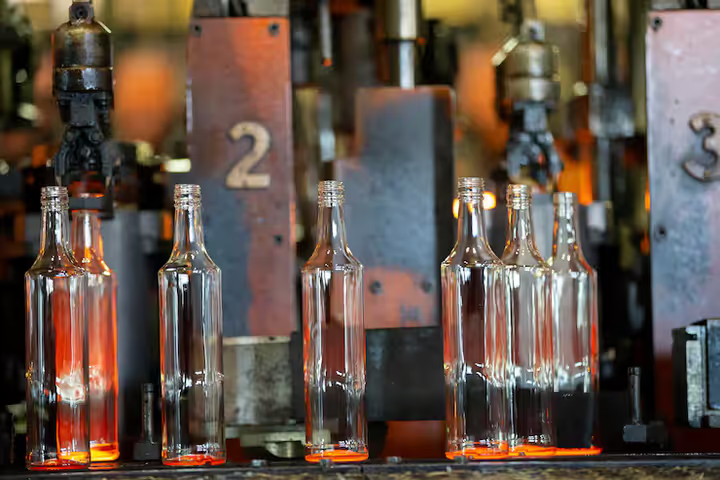
Glass bottle manufacturing is the industrial process of converting raw minerals into molded glass containers through high-temperature melting, forming, annealing, inspection, and packaging.
The manufacturing process has evolved significantly over the past century. Modern production lines can manufacture thousands of bottles every hour while maintaining strict dimensional accuracy and quality standards.
Glass bottle production typically emphasizes:
- Material purity
- Product consistency
- Heat resistance
- Chemical stability
- Long-term recyclability
- Manufacturing precision
Primary Raw Materials Used in Glass Bottle Manufacturing
The quality of a glass bottle begins with carefully selected raw materials.
| Raw Material | Purpose |
|---|---|
| Silica Sand | Main ingredient forming the glass structure |
| Soda Ash | Lowers the melting temperature |
| Limestone | Improves durability and chemical resistance |
| Feldspar | Enhances strength and stability |
| Cullet (Recycled Glass) | Reduces energy consumption during melting |
| Coloring Minerals | Produce amber, green, blue, or other colored glass |
Modern manufacturers often increase recycled glass content to reduce energy requirements while supporting circular manufacturing practices.
The Glass Bottle Production Process
Manufacturing glass bottles involves several carefully controlled production stages.
| Production Stage | Main Activity |
|---|---|
| Raw Material Mixing | Accurate batching of ingredients |
| Furnace Melting | Heating materials above 1,400°C |
| Conditioning | Preparing molten glass for forming |
| Bottle Forming | Blow-and-blow or press-and-blow molding |
| Annealing | Controlled cooling to remove stress |
| Inspection | Automated quality testing |
| Surface Treatment | Scratch resistance and durability improvements |
| Packaging | Safe handling and shipment preparation |
Modern production facilities use automated systems to monitor temperature, wall thickness, dimensions, and surface quality throughout production.
Common Types of Glass Bottles
Manufacturers produce different bottle designs depending on industry requirements.
Beverage Bottles
Used for:
- Water
- Soft drinks
- Juice
- Dairy beverages
- Specialty drinks
These bottles are designed to maintain product freshness while resisting pressure changes during storage and transportation.
Food Packaging Bottles
Commonly used for:
- Sauces
- Oils
- Vinegar
- Syrups
- Condiments
Glass provides an inert packaging environment that helps preserve flavor and product quality.
Pharmaceutical Bottles
These containers require extremely high manufacturing precision.
Characteristics include:
- High chemical resistance
- Consistent wall thickness
- Sterilization compatibility
- Strict quality inspection
Cosmetic Bottles
Manufactured for:
- Perfumes
- Essential oils
- Skincare products
- Hair care products
These bottles often feature specialized shapes and decorative finishes.
Laboratory Bottles
Designed for scientific applications where chemical compatibility and temperature resistance are essential.
Why Glass Bottle Manufacturing Matters Today
Glass bottle manufacturing supports numerous industries that require safe, durable, and recyclable packaging.
Growing environmental awareness has increased interest in packaging materials that can be reused and recycled multiple times. Glass fits well into this objective because it can be recycled repeatedly without significant degradation of quality.
Industries benefiting from glass bottles include:
- Food processing
- Beverage manufacturing
- Pharmaceutical production
- Cosmetic manufacturing
- Chemical industries
- Research laboratories
Benefits of Glass Bottles
Glass offers several functional advantages over many packaging materials.
| Benefit | Explanation |
|---|---|
| Recyclability | Can be recycled repeatedly |
| Chemical Stability | Does not react with most contents |
| Product Protection | Maintains taste and quality |
| Heat Resistance | Suitable for sterilization processes |
| Transparency | Allows easy product visibility |
| Durability | Long storage life under proper handling |
These characteristics make glass suitable for products requiring high packaging integrity.
Challenges Addressed by Modern Manufacturing
Advanced manufacturing technologies help address several production challenges.
These include:
- Consistent bottle dimensions
- Reduced manufacturing waste
- Lower furnace energy consumption
- Improved defect detection
- Better recycling efficiency
- Enhanced production automation
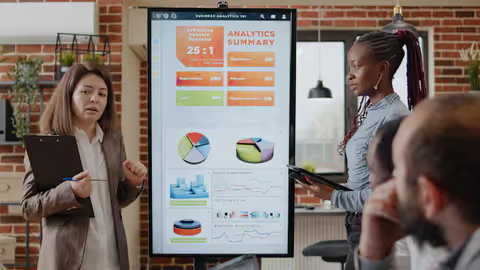
Artificial intelligence, machine vision, and industrial sensors now help manufacturers identify production defects in real time.
Recent Updates in Glass Bottle Manufacturing
The glass manufacturing industry has experienced several notable developments over the past year, particularly in sustainability and production efficiency.
Increased Use of Recycled Glass (2025–2026)
Many manufacturers have continued increasing the percentage of recycled glass (cullet) in production. Higher cullet content generally reduces the energy required for melting and lowers raw material consumption.
Greater Adoption of Electric and Hybrid Furnaces
During 2025 and into 2026, manufacturers have continued investing in electric and hybrid furnace technologies to reduce emissions associated with traditional fuel-fired furnaces.
Expansion of Smart Manufacturing
Industry 4.0 technologies are becoming more common, including:
- AI-powered inspection systems
- Predictive maintenance
- Digital production monitoring
- Automated quality control
- Data-driven process optimization
These technologies help improve production consistency while reducing downtime.
Lightweight Bottle Design
Manufacturers continue developing lighter glass bottles that require fewer raw materials while maintaining structural performance. Lightweight designs may also reduce transportation-related emissions.
Growing Circular Economy Initiatives
Governments and industries across many regions continue supporting improved glass collection and recycling programs during 2025–2026 to increase material recovery rates.
Laws, Regulations, and Industry Policies
Glass bottle manufacturing operates under various environmental, safety, and quality regulations that vary by country.
Manufacturers typically follow national environmental laws governing air emissions, waste management, industrial water use, and workplace safety.
Environmental Regulations
Many countries require manufacturers to:
- Reduce industrial emissions
- Improve energy efficiency
- Increase recycled material usage
- Monitor air quality
- Manage industrial waste responsibly
These regulations encourage sustainable manufacturing practices.
Food Contact Standards
Glass bottles intended for food and beverages must comply with food-contact material regulations that ensure packaging remains safe for consumer use.
Pharmaceutical Packaging Requirements
Glass containers used for medicines are generally manufactured according to pharmaceutical quality standards that emphasize purity, dimensional accuracy, and contamination control.
Occupational Safety Requirements
Manufacturing facilities commonly implement workplace safety measures covering:
- High-temperature furnace operations
- Machinery safety
- Dust control
- Personal protective equipment
- Emergency response planning
Quality Management Standards
Many manufacturers operate quality management systems based on internationally recognized standards that support product consistency and continuous improvement.
Helpful Tools and Resources
Various digital tools and technical resources assist professionals, students, and researchers in understanding glass bottle manufacturing.
| Tool or Resource | Purpose |
|---|---|
| Glass Density Calculators | Estimate material properties |
| Bottle Volume Calculators | Calculate container capacity |
| CAD Design Software | Design bottle shapes |
| Manufacturing Simulation Software | Analyze production processes |
| Quality Inspection Systems | Detect dimensional defects |
| Energy Monitoring Platforms | Track furnace efficiency |
| Recycling Rate Dashboards | Monitor material recovery |
| Technical Standards Libraries | Access manufacturing guidelines |
Educational Resources
Useful learning materials include:
- Manufacturing engineering textbooks
- Materials science references
- Packaging technology publications
- Industrial automation documentation
- Environmental sustainability reports
- Government manufacturing guidelines
Professional Skills Related to Glass Manufacturing
Professionals working with glass manufacturing often develop knowledge in:
- Materials engineering
- Industrial automation
- Mechanical engineering
- Manufacturing quality control
- Industrial maintenance
- Environmental management
- Process optimization
These disciplines contribute to efficient and reliable production systems.
Frequently Asked Questions
What materials are mainly used to manufacture glass bottles?
Glass bottles are primarily produced using silica sand, soda ash, limestone, recycled glass (cullet), and small quantities of additional minerals that improve strength or create specific colors.
Why are recycled glass materials important?
Recycled glass melts at a lower energy requirement than many raw materials, helping reduce energy consumption while supporting circular manufacturing practices.
Which industries use glass bottles the most?
Food processing, beverage production, pharmaceuticals, cosmetics, chemicals, and laboratory research are among the largest users of glass bottle packaging.
How are defects detected during manufacturing?
Modern production facilities commonly use automated cameras, laser measurement systems, machine vision technology, and electronic inspection equipment to identify cracks, dimensional variations, and surface imperfections.
Can glass bottles be recycled multiple times?
Yes. Glass is one of the few packaging materials that can generally be recycled repeatedly without significant loss of quality, making it an important material in many recycling systems.
Conclusion
Glass bottle manufacturers remain an important part of modern industrial production by supplying reliable packaging for food, beverages, pharmaceuticals, cosmetics, laboratories, and numerous other applications. Advances in automation, quality inspection, recycling technology, and energy-efficient production continue improving manufacturing performance while supporting environmental goals.
As sustainability becomes a greater priority worldwide, manufacturers are increasingly adopting recycled materials, smart factory technologies, lightweight designs, and cleaner production methods. Combined with strong quality standards and regulatory compliance, these developments help ensure that glass bottles continue serving as a durable, safe, and recyclable packaging solution across a wide range of industries.