Industrial Asset Tracking Software: A Complete Guide for Modern Businesses
Industrial asset tracking software helps organizations monitor, identify, and manage physical assets throughout their lifecycle. As industries continue to adopt digital technologies, keeping track of equipment, machinery, tools, containers, and other valuable assets has become more important than ever.
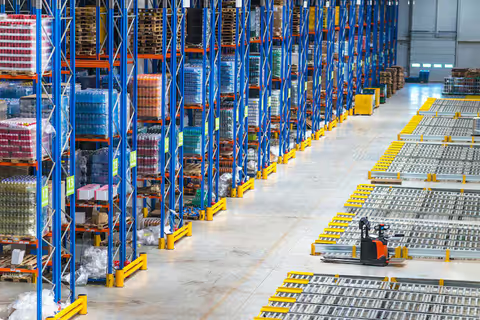
Many businesses operate across multiple facilities, warehouses, factories, or construction sites where assets are constantly moving. Without an organized tracking system, companies may face challenges such as misplaced equipment, maintenance delays, inaccurate inventory records, and inefficient resource utilization.
Modern asset tracking platforms combine technologies such as barcode labels, QR codes, RFID (Radio Frequency Identification), GPS, Bluetooth Low Energy (BLE), and Internet of Things (IoT) sensors to provide real-time visibility into industrial assets. These systems support informed decision-making through centralized dashboards, automated reports, and maintenance records.
Understanding Industrial Asset Tracking Software
Industrial asset tracking software is a digital solution designed to record, monitor, and manage physical assets throughout their operational life. Instead of relying on spreadsheets or manual logs, organizations use software to maintain accurate information about asset location, condition, maintenance history, ownership, and usage.
The software typically integrates with identification technologies such as:
- Barcode labels
- QR codes
- RFID tags
- GPS tracking devices
- Bluetooth beacons
- IoT sensors
- NFC tags
These technologies allow businesses to identify assets quickly while reducing manual data entry.
Typical assets tracked include:
| Asset Category | Examples |
|---|---|
| Manufacturing Equipment | CNC machines, conveyors, production lines |
| Warehouse Assets | Forklifts, pallets, storage racks |
| Construction Equipment | Excavators, generators, compressors |
| IT Assets | Servers, laptops, networking devices |
| Medical Equipment | Diagnostic machines, hospital devices |
| Fleet Assets | Trucks, trailers, delivery vehicles |
| Energy Equipment | Pumps, turbines, transformers |
The primary purpose is to improve visibility into asset movement and support better operational planning.
Why Industrial Asset Tracking Software Matters Today
Industries are becoming increasingly data-driven. Manufacturing, logistics, healthcare, utilities, mining, construction, and transportation organizations depend on accurate asset information for daily operations.
Without effective tracking, businesses may experience:
- Difficulty locating equipment
- Unexpected maintenance issues
- Duplicate purchases due to missing assets
- Reduced operational efficiency
- Increased downtime
- Inaccurate inventory records
- Compliance documentation challenges
Asset tracking software addresses these issues by providing reliable asset information in one centralized platform.
Benefits Across Different Industries
| Industry | Common Benefits |
|---|---|
| Manufacturing | Equipment monitoring, preventive maintenance |
| Logistics | Shipment and container visibility |
| Construction | Tool and machinery tracking |
| Healthcare | Medical equipment availability |
| Energy | Infrastructure inspection records |
| Utilities | Field asset management |
| Mining | Heavy equipment monitoring |
Operational Advantages
Organizations often benefit from:
- Improved asset utilization
- Faster equipment identification
- Better maintenance scheduling
- Accurate lifecycle documentation
- Reduced manual record keeping
- Improved audit readiness
- Better inventory visibility
- Enhanced reporting capabilities
Technologies Supporting Modern Asset Tracking
Industrial environments increasingly combine several technologies together.
| Technology | Primary Use |
|---|---|
| RFID | Automatic asset identification |
| GPS | Outdoor asset location |
| BLE | Indoor positioning |
| Barcode | Low-complexity tracking |
| QR Code | Mobile device scanning |
| IoT Sensors | Environmental monitoring |
| Cloud Computing | Centralized data access |
| Artificial Intelligence | Predictive insights |
The combination of these technologies supports digital transformation initiatives across industrial sectors.
Recent Updates and Industry Trends
Industrial asset tracking technology has continued to evolve throughout 2025 and into 2026. Several developments have influenced how organizations manage equipment and infrastructure.
Growth of IoT-Based Asset Monitoring
Industrial IoT deployments continue expanding as organizations connect machinery with smart sensors capable of transmitting operational data automatically.
Common monitored data includes:
- Temperature
- Vibration
- Pressure
- Runtime
- Energy consumption
- Operating status
This information supports predictive maintenance strategies rather than reactive repairs.
Greater Adoption of AI Analytics
Artificial intelligence is increasingly used to analyze equipment behavior and identify unusual operating patterns.
AI-assisted asset management can help organizations:
- Detect abnormal equipment performance
- Improve maintenance scheduling
- Analyze historical asset data
- Support operational planning
Cloud-Based Platforms Continue Expanding
Cloud deployment remains a significant trend because it allows organizations to access asset information from multiple locations using secure internet connections.
Benefits include:
- Centralized databases
- Automatic software updates
- Easier collaboration
- Remote monitoring
- Simplified reporting
Digital Twin Integration
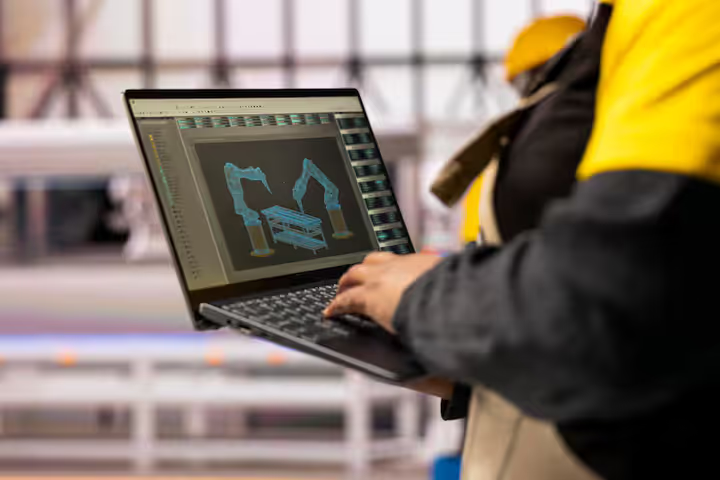
Many industrial organizations are exploring digital twin technology, which creates virtual representations of physical equipment.
Digital twins help engineers analyze:
- Equipment performance
- Maintenance history
- Operational simulations
- Asset lifecycle information
Sustainability and Energy Monitoring
Environmental reporting requirements have encouraged companies to monitor asset energy usage more closely.
Many organizations now use asset tracking platforms to:
- Record energy consumption
- Monitor equipment efficiency
- Document maintenance activities
- Support sustainability reporting
Laws, Regulations, and Policy Considerations
Industrial asset tracking software itself is generally not regulated as a standalone technology. However, organizations using these systems often operate within regulatory frameworks related to equipment management, workplace safety, cybersecurity, environmental reporting, and data protection.
Requirements vary by country and industry.
Workplace Safety Regulations
Many industries must maintain inspection and maintenance records for equipment.
Examples include:
- Manufacturing machinery
- Lifting equipment
- Pressure systems
- Electrical installations
Asset tracking software helps organize maintenance documentation required during inspections.
Data Protection Laws
Organizations storing employee or location information should consider applicable privacy regulations.
Examples include:
- GDPR (European Union)
- UK GDPR
- Digital Personal Data Protection Act (India)
- Other national privacy regulations
Proper access controls and secure data storage are important considerations.
Cybersecurity Standards
Industrial organizations increasingly follow cybersecurity frameworks to protect operational technology systems.
Examples include:
- IEC 62443
- NIST Cybersecurity Framework
- ISO/IEC 27001
These standards emphasize secure system architecture, authentication, and risk management.
Environmental Reporting
Many industries now document equipment performance to support environmental compliance initiatives.
Asset management systems may assist organizations with:
- Maintenance documentation
- Energy monitoring
- Equipment lifecycle reporting
- Asset disposal records
Businesses should always consult local regulatory requirements applicable to their industry and country.
Useful Tools and Resources
Industrial asset tracking software often works alongside complementary digital tools that improve operational efficiency.
| Tool or Resource | Purpose |
|---|---|
| RFID Readers | Read RFID asset tags |
| Barcode Scanners | Identify labeled assets |
| QR Code Generators | Create scannable labels |
| Mobile Inspection Apps | Field data collection |
| Maintenance Management Software (CMMS) | Equipment maintenance records |
| Enterprise Asset Management (EAM) Systems | Asset lifecycle management |
| ERP Software | Inventory and operational integration |
| IoT Dashboards | Sensor monitoring |
| GIS Mapping Platforms | Geographic asset visualization |
| Data Analytics Platforms | Reporting and dashboards |
Additional helpful resources include:
- Equipment maintenance templates
- Asset inventory spreadsheets
- Preventive maintenance schedules
- Calibration logs
- Inspection checklists
- Asset lifecycle documentation
- Equipment audit templates
- Risk assessment forms
Common Features Found in Asset Tracking Platforms
| Feature | Purpose |
|---|---|
| Asset Database | Centralized records |
| Location Tracking | Current asset position |
| Maintenance History | Service documentation |
| Alerts | Scheduled notifications |
| Reporting Dashboard | Performance analysis |
| Mobile Access | Field updates |
| Audit Logs | Activity records |
| User Permissions | Controlled access |
These features support better organization without replacing operational expertise.
Frequently Asked Questions
What is industrial asset tracking software?
Industrial asset tracking software is a digital system used to record, monitor, and manage physical assets such as machinery, equipment, tools, vehicles, and inventory throughout their lifecycle.
Which industries commonly use asset tracking software?
Manufacturing, logistics, construction, healthcare, utilities, mining, transportation, warehousing, agriculture, and energy industries commonly use asset tracking systems to improve equipment visibility and operational management.
What technologies are used for industrial asset tracking?
Common technologies include RFID, barcode labels, QR codes, GPS tracking, Bluetooth Low Energy (BLE), NFC, IoT sensors, cloud computing, and mobile applications.
How does asset tracking improve maintenance management?
Asset tracking software stores maintenance history, inspection records, service schedules, and equipment usage data, making preventive maintenance planning more organized and reducing unexpected downtime.
Is industrial asset tracking software suitable for both small and large organizations?
Yes. Organizations of different sizes can implement asset tracking systems according to their operational requirements, asset volume, and infrastructure. The specific features used often depend on the complexity of the organization's operations.
Conclusion
Industrial asset tracking software has become an important component of modern industrial operations by helping organizations maintain accurate records of equipment, tools, and infrastructure throughout their lifecycle. As industries continue adopting IoT, cloud computing, artificial intelligence, and digital transformation strategies, asset tracking systems are evolving beyond simple inventory management into comprehensive operational intelligence platforms.
Accurate asset information supports maintenance planning, operational efficiency, compliance documentation, and better decision-making across manufacturing, logistics, healthcare, construction, utilities, and many other sectors. Although technologies and regulations continue to evolve, the fundamental objective remains the same: providing reliable visibility into physical assets while supporting safe, efficient, and well-documented industrial operations.