Indoor Security Cameras for Home Monitoring: An Informative Guide
Indoor security cameras have become a common part of modern home security systems. These devices help people monitor indoor spaces, improve household awareness, and support everyday safety. Advances in internet connectivity, artificial intelligence (AI), and smart home technology have made indoor monitoring more practical and accessible than ever before.
Unlike outdoor cameras that focus on entrances and property boundaries, indoor security cameras are designed to observe activity inside a home. They may be placed in living rooms, hallways, nurseries, home offices, or other shared spaces depending on individual needs.
As connected devices continue to evolve, indoor security cameras now include features such as motion detection, cloud storage, local storage, mobile notifications, and smart automation. Understanding how these systems work helps homeowners make informed decisions while respecting privacy and security.
Understanding Indoor Security Cameras
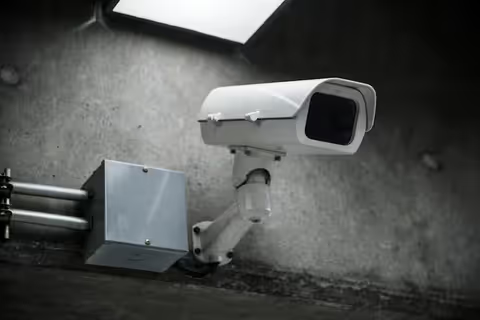
An indoor security camera is a digital monitoring device that records or streams video from inside a building. Most cameras connect to a home Wi-Fi network, allowing users to view live footage through a smartphone, tablet, or computer.
Modern cameras may include:
- High-definition video recording
- Night vision
- Motion detection
- Two-way audio
- AI-powered person or pet detection
- Smart alerts
- Cloud or local video storage
- Integration with smart home platforms
Different models may prioritize different features depending on household requirements, privacy preferences, and compatibility with existing smart devices.
How Indoor Monitoring Systems Work
A typical indoor monitoring system follows a simple process.
| Step | Description |
|---|---|
| Video Capture | Camera continuously or selectively records video. |
| Motion Detection | Built-in sensors identify movement. |
| Processing | Software analyzes activity and creates alerts. |
| Storage | Video is saved locally or in cloud storage. |
| Remote Access | Users view recordings through secure applications. |
Many systems also allow activity schedules so cameras only operate during selected hours.
Why Indoor Security Cameras Matter Today
Indoor monitoring has become increasingly important as households rely more on connected technology and remote management. Families, caregivers, and homeowners often seek better awareness of what happens inside the home when they are away.
These systems may support:
- Household awareness
- Child monitoring
- Elder care observation
- Pet activity monitoring
- Smart home automation
- Incident documentation
- Property protection
- Remote home management
The growing number of connected households has also increased interest in cybersecurity, encrypted communications, and responsible data protection.
Who Uses Indoor Security Cameras?
Indoor cameras are used in many situations, including:
- Families monitoring common areas
- Remote workers protecting home offices
- Individuals living alone
- Pet owners checking daily activities
- Caregivers supporting elderly relatives
- Apartment residents improving indoor awareness
Each household may have different privacy expectations, making thoughtful placement and responsible use important.
Problems Indoor Cameras Help Address
Indoor monitoring can help improve awareness in situations such as:
- Unexpected indoor movement
- Forgotten open doors
- Pet behavior during the day
- Household maintenance visits
- General home security monitoring
- Emergency event documentation
While cameras provide useful information, they should be combined with good cybersecurity practices and appropriate privacy safeguards.
Common Features Found in Modern Cameras
| Feature | Purpose |
|---|---|
| HD Video | Produces clearer recordings |
| Night Vision | Improves visibility in low light |
| Motion Detection | Detects movement automatically |
| AI Detection | Identifies people, pets, or vehicles (where supported) |
| Two-Way Audio | Allows communication through the device |
| Activity Zones | Focuses monitoring on selected areas |
| Mobile Alerts | Sends notifications to connected devices |
| Local Storage | Saves recordings on memory cards or local hubs |
| Cloud Backup | Stores recordings on remote servers |
| Smart Home Integration | Connects with compatible smart ecosystems |
Recent Updates in Indoor Security Camera Technology
The indoor security camera industry has continued to evolve throughout 2025 and early 2026, driven by improvements in artificial intelligence, cybersecurity, and smart home standards.
Several notable developments include:
- Greater use of on-device AI processing, reducing the need to send video to external servers.
- Improved privacy controls, including physical privacy shutters and microphone mute options.
- Expanded support for the Matter smart home standard, improving compatibility across different ecosystems.
- Better facial recognition controls with stronger user permissions.
- Enhanced encryption for cloud communication and remote viewing.
- More efficient video compression technologies that reduce storage requirements.
- Increased emphasis on cybersecurity updates delivered automatically through firmware improvements.
Manufacturers have also focused on giving users more control over notification settings to reduce unnecessary alerts while improving meaningful event detection.
Emerging Trends
Current technology trends include:
- Edge AI video processing
- Smart home automation
- Voice assistant integration
- Energy-efficient devices
- Privacy-first camera design
- Improved low-light image sensors
- Secure remote monitoring
- Multi-camera synchronization
Indoor Security Camera Technology Trends
AI Detection            ██████████████
Privacy Controls        █████████████
Smart Home Integration  ███████████████
Cloud Security          ████████████
Local Storage           ██████████
Edge Processing         █████████████
The chart illustrates general technology adoption trends rather than market share.
Privacy, Laws, and Policies
Indoor security cameras are subject to privacy laws that vary between countries and regions. While regulations differ, most emphasize responsible recording, personal privacy, and secure handling of personal information.
Common legal principles include:
- Recording should respect the privacy of household members and visitors.
- Audio recording may be subject to additional consent requirements in some jurisdictions.
- Personal data should be stored securely.
- Users should follow local data protection laws.
- Cameras should generally avoid recording private spaces where privacy is reasonably expected.
Data Protection Regulations
Several regulations influence connected camera usage around the world.
| Region | Relevant Regulation |
|---|---|
| European Union | General Data Protection Regulation (GDPR) |
| United Kingdom | UK Data Protection Act |
| United States | State privacy laws vary by jurisdiction |
| Canada | Personal Information Protection and Electronic Documents Act (PIPEDA) |
| Australia | Privacy Act and state surveillance legislation |
Users should review applicable local laws before installing indoor monitoring devices.
Cybersecurity Best Practices
To improve security:
- Use strong passwords.
- Enable multi-factor authentication where available.
- Update firmware regularly.
- Review camera permissions.
- Secure Wi-Fi with modern encryption.
- Disable unused remote access features.
- Regularly review connected devices.
These practices help reduce cybersecurity risks while protecting personal information.
Helpful Tools and Resources
Several digital resources can help users better understand indoor monitoring technology and maintain secure connected homes.
| Resource Type | Purpose |
|---|---|
| Home Security Apps | Monitor cameras remotely |
| Smart Home Dashboards | Manage connected devices |
| Password Managers | Improve account security |
| Network Security Scanners | Identify connected devices |
| Cloud Storage Managers | Organize recordings |
| Privacy Checklists | Review security settings |
| Home Network Monitoring Tools | Detect unusual activity |
| Device Firmware Update Utilities | Maintain security updates |
Useful Educational Resources
Helpful sources of information include:
- Government cybersecurity guidance
- Data privacy authority publications
- Smart home security best practices
- Consumer technology documentation
- Home network security learning resources
- Digital privacy awareness guides
Good Practices for Indoor Camera Placement
Consider these recommendations:
- Monitor shared indoor spaces when appropriate.
- Avoid recording private areas such as bathrooms.
- Inform household members about camera placement.
- Position cameras to reduce unnecessary recording.
- Periodically review privacy settings.
- Remove unused devices from the network.
Responsible placement helps balance household security with personal privacy.
Frequently Asked Questions
What is an indoor security camera?
An indoor security camera is a digital device designed to monitor activity inside a home through live video, recorded footage, or motion-triggered events.
Do indoor cameras require internet access?
Many smart cameras use internet connectivity for remote viewing and cloud storage. Some models also support local recording without continuous internet access.
Are indoor security cameras secure?
Security depends on proper configuration. Strong passwords, software updates, encrypted connections, and secure Wi-Fi significantly improve protection against unauthorized access.
Can indoor cameras work with smart home systems?
Many modern cameras integrate with compatible smart home platforms, allowing automation, voice control, and centralized device management.
How can privacy be protected when using indoor cameras?
Users should place cameras responsibly, review privacy settings, secure accounts with strong authentication, update firmware regularly, and follow applicable privacy laws.
Conclusion
Indoor security cameras have become an important part of connected home technology by helping households improve awareness, monitor shared spaces, and support everyday safety. Modern systems combine high-definition video, artificial intelligence, encrypted communication, and smart home integration to create more capable monitoring solutions.
At the same time, responsible use remains essential. Privacy considerations, cybersecurity practices, regular software updates, and compliance with local regulations all contribute to the safe use of indoor monitoring technology.
As connected homes continue to evolve, indoor security cameras are expected to become more intelligent, privacy-focused, and energy-efficient, providing homeowners with improved visibility while supporting responsible digital security.