Centrifugal Pump Explained: Working Principle, Types, Components, and Applications
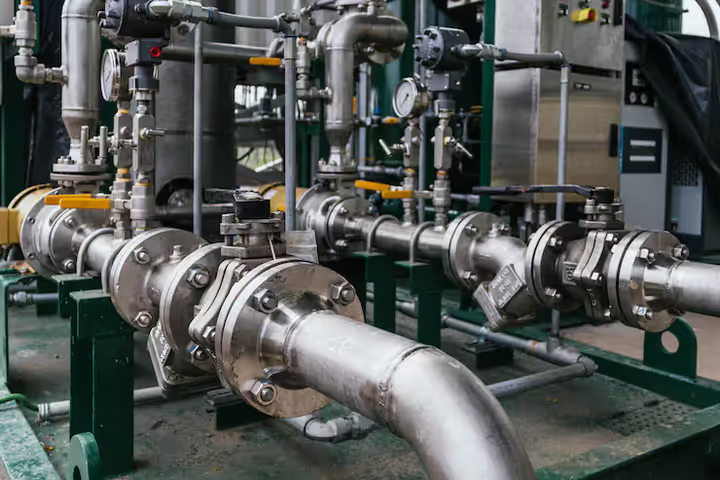
A centrifugal pump is one of the most widely used mechanical devices for moving liquids from one location to another. It operates by converting the rotational energy of a motor into hydraulic energy, allowing fluids to flow through pipelines with consistent pressure and speed.
These pumps are found in industries, commercial buildings, agricultural systems, water treatment facilities, manufacturing plants, power generation, and residential infrastructure. Their simple design, reliable operation, and ability to handle different flow requirements have made them an essential part of modern fluid handling systems.
Unlike positive displacement pumps, centrifugal pumps work best when a continuous flow of liquid is required. They are commonly used for transporting clean water, chemicals, oils, cooling liquids, and various industrial fluids depending on the pump design and construction materials.
Because of their versatility, centrifugal pumps continue to play an important role in improving operational efficiency across numerous sectors.
Why Centrifugal Pumps Matter
Efficient liquid movement is essential in nearly every industry. From supplying drinking water to cooling industrial machinery, centrifugal pumps support many everyday operations that people often take for granted.
Their importance continues to grow because industries increasingly require dependable systems capable of operating continuously while minimizing energy consumption.
Some key areas where centrifugal pumps make a significant impact include:
- Municipal water distribution
- Wastewater management
- Industrial manufacturing
- Food and beverage processing
- Chemical processing
- Oil and gas operations
- HVAC systems
- Fire protection systems
- Agricultural irrigation
- Mining operations
Problems They Help Solve
Centrifugal pumps help address several operational challenges:
- Maintaining stable liquid flow
- Reducing manual fluid transportation
- Supporting continuous industrial production
- Managing cooling systems
- Improving water circulation
- Handling wastewater efficiently
- Supporting process automation
Without reliable pumping systems, many industrial and public infrastructure projects would experience reduced efficiency and increased downtime.
Working Principle of a Centrifugal Pump
The operation of a centrifugal pump is based on centrifugal force.
When the pump motor rotates the impeller, liquid enters through the suction inlet located at the center of the impeller. As the impeller spins rapidly, centrifugal force pushes the liquid outward toward the impeller edges.
The volute casing or diffuser then converts the liquid's velocity into pressure, allowing the fluid to exit through the discharge outlet.
The complete process occurs continuously while the pump remains operational.
Basic Flow Process
| Step | Process |
|---|---|
| Liquid enters | Through suction pipe |
| Impeller rotates | Adds velocity to liquid |
| Centrifugal force acts | Liquid moves outward |
| Pressure increases | Volute converts velocity into pressure |
| Liquid exits | Through discharge pipe |
Main Components of a Centrifugal Pump
Understanding the major parts helps explain how the entire system functions efficiently.
| Component | Function |
|---|---|
| Impeller | Transfers energy to the liquid |
| Pump Casing | Directs liquid flow and builds pressure |
| Shaft | Connects motor to impeller |
| Bearings | Support smooth shaft rotation |
| Mechanical Seal | Prevents liquid leakage |
| Wear Rings | Reduce internal leakage |
| Suction Nozzle | Fluid entry point |
| Discharge Nozzle | Fluid exit point |
| Motor | Provides rotational power |
Each component contributes to reliable pump operation and overall efficiency.
Types of Centrifugal Pumps
Different applications require different centrifugal pump designs.
Single-Stage Centrifugal Pump
This design contains one impeller and is commonly used for moderate pressure applications such as water supply systems and cooling systems.
Multi-Stage Centrifugal Pump
Multiple impellers are installed in series to generate higher pressure.
Typical applications include:
- Boiler feed systems
- High-rise buildings
- Reverse osmosis plants
- Industrial pressure systems
End Suction Pump
The liquid enters from one side of the pump.
Common uses include:
- Building services
- HVAC systems
- Water circulation
Split Case Pump
These pumps have a casing divided into two halves for easier maintenance.
They are frequently used in:
- Municipal water systems
- Large industrial facilities
- Power stations
Vertical Centrifugal Pump
The motor is positioned vertically above the pump.
These pumps are often installed where floor space is limited.
Submersible Centrifugal Pump
Both the motor and pump operate below the liquid surface.
Typical applications include:
- Groundwater extraction
- Sewage systems
- Drainage operations
Advantages of Centrifugal Pumps
Centrifugal pumps remain popular because they provide several operational benefits.
Some advantages include:
- Simple mechanical design
- Continuous fluid flow
- Smooth operation
- Low vibration
- Wide operating range
- Easy integration into automated systems
- Suitable for various liquid types
- High operational reliability
- Compact installation options
Common Applications
Centrifugal pumps support numerous industries and infrastructure systems.
| Industry | Typical Application |
|---|---|
| Water Treatment | Water distribution |
| Agriculture | Irrigation systems |
| Manufacturing | Process liquid transfer |
| Chemical Plants | Chemical circulation |
| Oil & Gas | Fluid transportation |
| HVAC | Cooling water circulation |
| Power Plants | Boiler feed systems |
| Mining | Slurry transport |
| Food Processing | Liquid handling |
| Fire Protection | Emergency water supply |
Factors That Influence Pump Performance
Several variables affect how efficiently a centrifugal pump operates.
These include:
- Flow rate
- Total dynamic head
- Pump speed
- Impeller diameter
- Liquid viscosity
- Temperature
- System pressure
- Pipe size
- Suction conditions
Proper system design helps achieve stable performance while reducing unnecessary energy use.
Maintenance Considerations
Routine inspection helps maintain consistent performance throughout a pump's operating life.
Recommended maintenance activities include:
- Checking bearings regularly
- Monitoring vibration levels
- Inspecting mechanical seals
- Examining impeller wear
- Verifying shaft alignment
- Cleaning strainers
- Monitoring motor performance
- Checking lubrication intervals
Preventive maintenance also reduces the likelihood of unexpected operational interruptions.
Recent Developments in Centrifugal Pump Technology
During 2025–2026, manufacturers and industrial operators continued adopting technologies that improve operational efficiency, equipment monitoring, and sustainability.
Several notable trends include:
- Greater use of smart sensors for real-time performance monitoring.
- Increased integration with Industrial Internet of Things (IIoT) platforms.
- Wider adoption of variable frequency drives (VFDs) to optimize energy consumption based on demand.
- Expanded use of digital monitoring systems for predictive maintenance and condition-based inspections.
- Continued development of high-efficiency hydraulic designs that support lower energy usage.
- Increased use of corrosion-resistant materials and advanced coatings for demanding environments.
Many industrial facilities are also incorporating digital asset management systems to monitor pump health, operating hours, vibration levels, and maintenance schedules. These developments reflect the broader move toward Industry 4.0 and energy-efficient industrial operations.
Laws, Standards, and Policies
The use and operation of centrifugal pumps are influenced by technical standards, environmental regulations, and energy efficiency policies in many countries. While requirements vary by region, several internationally recognized standards are commonly referenced.
Some important standards include:
| Standard | Purpose |
|---|---|
| ISO 5199 | Technical requirements for centrifugal pumps used in industrial applications |
| ISO 2858 | Dimensions and performance standards for end-suction centrifugal pumps |
| ISO 9906 | Hydraulic performance acceptance testing |
| IEC Motor Efficiency Standards | Energy efficiency classifications for electric motors |
| Environmental Regulations | Encourage reduced energy consumption and efficient water management |
| Workplace Safety Regulations | Promote safe installation, operation, and maintenance practices |
Many governments also encourage the adoption of energy-efficient pumping systems through broader industrial energy conservation programs and infrastructure modernization initiatives. Compliance with local electrical, environmental, and occupational safety requirements remains important for pump installations.
Useful Tools and Resources
Various digital resources help engineers, students, technicians, and facility managers understand, evaluate, and maintain centrifugal pump systems.
Helpful resources include:
- Pump selection software
- Hydraulic calculation calculators
- Flow rate calculators
- Total Dynamic Head (TDH) calculators
- Net Positive Suction Head (NPSH) calculators
- Motor efficiency calculators
- Pipe friction loss calculators
- Preventive maintenance checklists
- Equipment inspection templates
- Energy consumption monitoring software
- Vibration analysis tools
- Digital maintenance management systems (CMMS)
These resources support system design, operational planning, maintenance scheduling, and performance evaluation.
Frequently Asked Questions
What is the basic working principle of a centrifugal pump?
A centrifugal pump uses a rotating impeller to convert mechanical energy into hydraulic energy, creating pressure that moves liquid through a piping system.
Where are centrifugal pumps commonly used?
They are commonly used in water supply systems, industrial manufacturing, chemical processing, agriculture, HVAC systems, wastewater treatment, mining, and power generation.
What liquids can centrifugal pumps handle?
Depending on the pump design and materials, centrifugal pumps can handle clean water, chemicals, oils, coolants, wastewater, and certain slurry applications.
What factors affect centrifugal pump efficiency?
Efficiency depends on flow rate, pump speed, impeller design, system pressure, liquid properties, pipe layout, suction conditions, and routine maintenance.
Why is preventive maintenance important?
Regular inspection helps identify wear, maintain stable performance, improve operational reliability, reduce unexpected downtime, and extend equipment lifespan.
Conclusion
Centrifugal pumps remain one of the most important technologies for liquid transportation across industrial, commercial, agricultural, and municipal applications. Their straightforward operating principle, adaptable designs, and ability to support continuous fluid movement make them suitable for a wide variety of environments.
As industries increasingly adopt digital monitoring, predictive maintenance, and energy-efficient technologies, centrifugal pumps continue to evolve alongside modern engineering practices. Understanding their working principle, components, types, applications, and relevant standards helps engineers, technicians, students, and facility managers make informed decisions when designing, operating, or maintaining fluid handling systems.